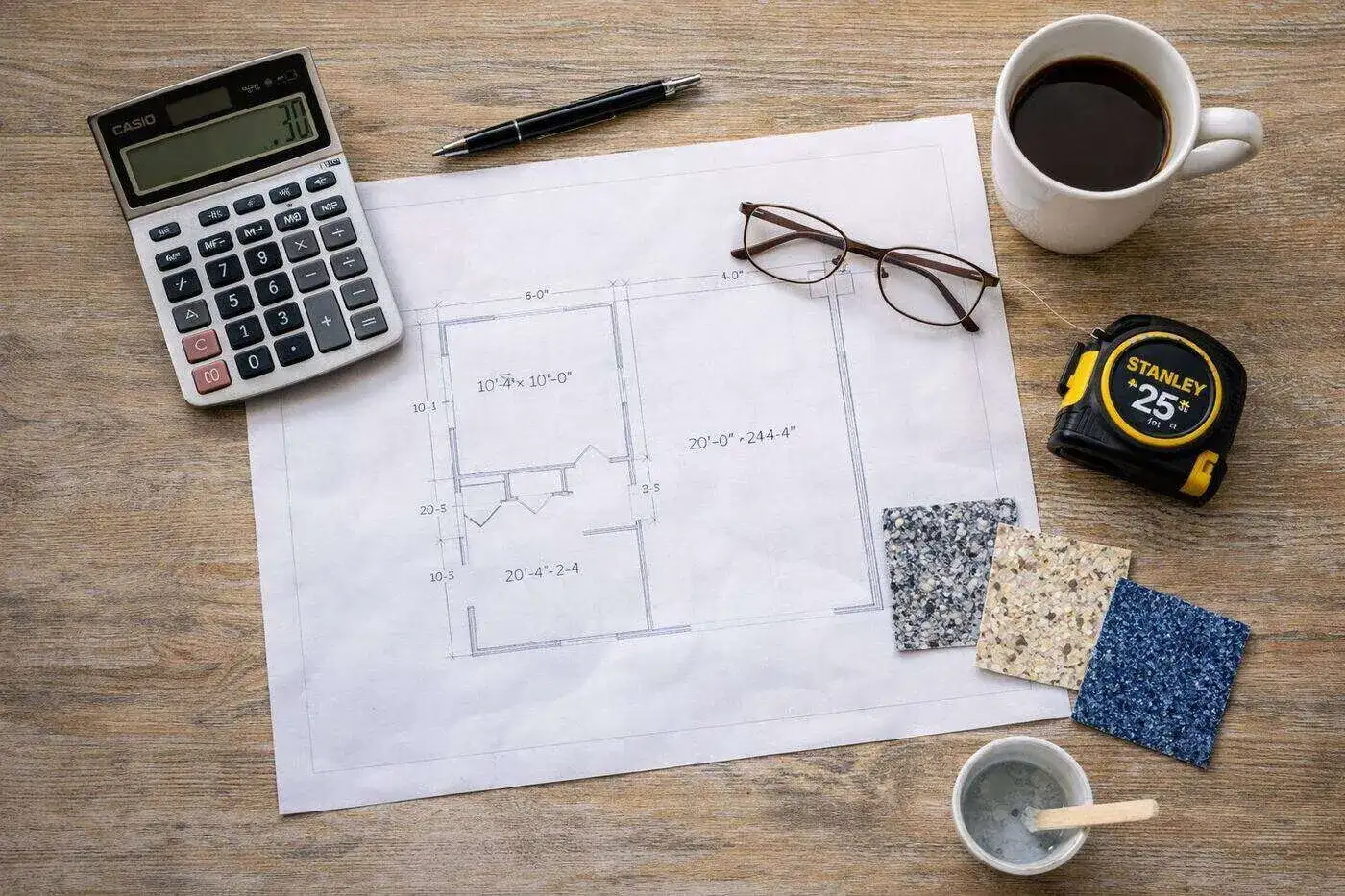
In Greater Baton Rouge, every epoxy floor is priced after a free on-site measurement, because the size of the space, the condition of the slab, the system you choose, and the prep the concrete needs all move the number. And the factor that most often decides your price here is one most national guides never mention: the moisture line item.
A chart can't price an epoxy floor in the Capital Region, and the reason is the ground. A floor priced off a slab in dry Phoenix concrete tells you nothing about what a floor costs over Baton Rouge ground. We sit in a basin between the Mississippi River and the Amite, on heavy clay that holds water, under Gulf humidity that runs high most of the year. That combination means the slab under your garage is almost always wetter than the national playbook assumes, and that single fact ripples through every line of a real quote. So instead of opening with a generic chart, this guide opens where the money actually moves: the moisture test and what it triggers.
At Ascent Epoxy Baton Rouge, Houston and the crew price every job off your actual slab, not a template. Whether you are coating a single-car garage in Mid City or refinishing a whole-home interior out in Prairieville, the factors below are what move the price across East Baton Rouge, Ascension, and Livingston parishes. Want the number for your specific concrete? Call (337) 243-3062 for a free on-site estimate, or read on first.
The Moisture Line Item That Sets Your Baton Rouge Price
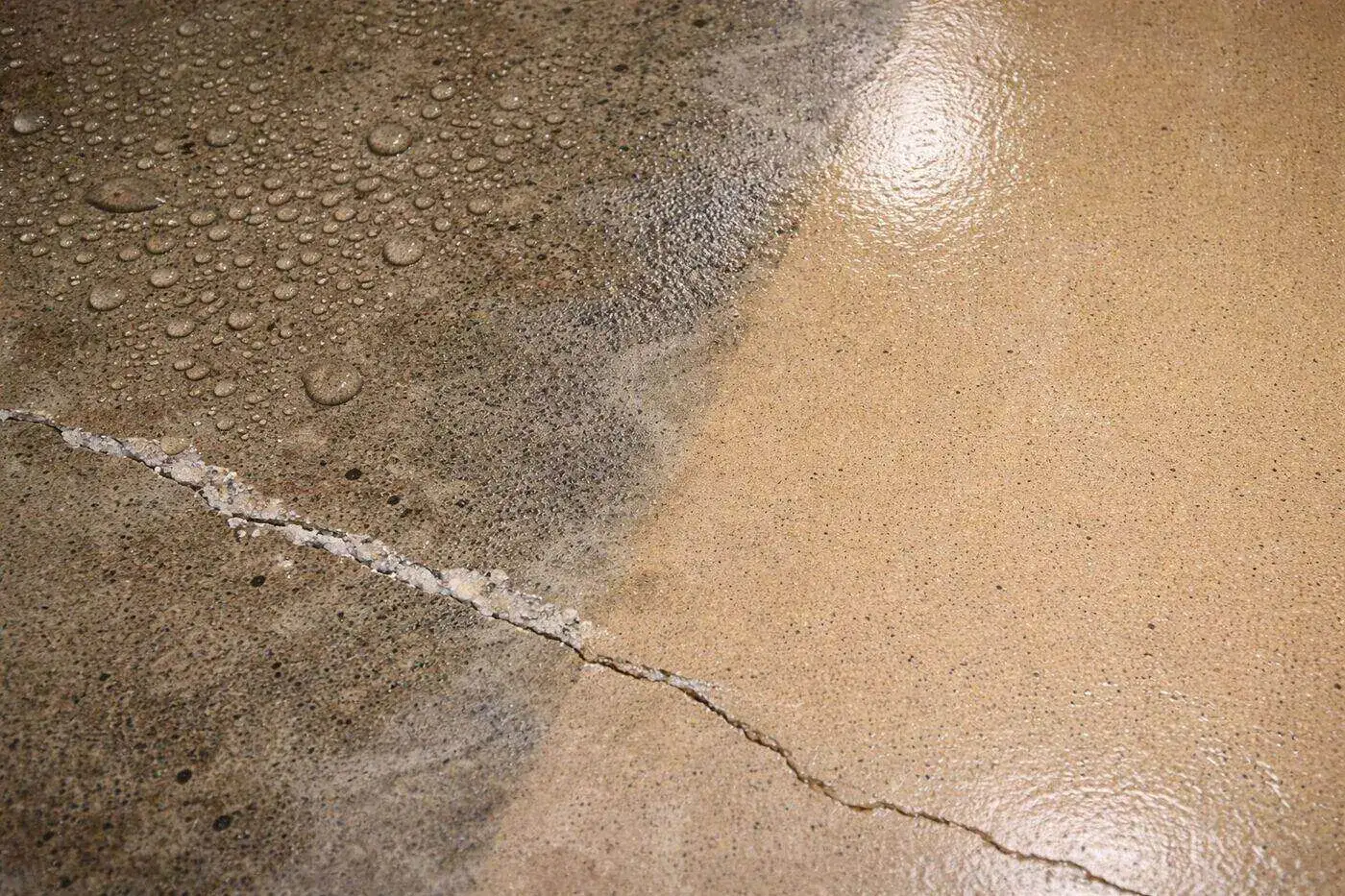
Here is the single most important thing to understand before you compare a single quote: in this market, the floor is only as good as the moisture test that comes before it. Greater Baton Rouge sits on a high water table fed by the river and the surrounding bayous, over clay soil that wicks and holds groundwater against the underside of your slab. When that moisture has nowhere to go, it pushes vapor up through the concrete, and a coating laid over it will blister, cloud, and peel from below within a season or two. It is the number-one reason epoxy fails in South Louisiana.
A real installer here starts with a moisture test, either a calcium chloride kit or a relative-humidity probe set into the slab. We include that test free on every estimate, though many shops bill for it. If the reading comes back above the safe threshold, a moisture-mitigation primer or vapor barrier goes down before any epoxy, and that step adds to the per-square-foot price. In our experience across the parishes, somewhere around one in three residential slabs and more than half of commercial slabs need it. That is the line item that separates a Baton Rouge quote from a Denver one, and it is the first thing you should confirm any contractor is testing for.
What Changes the Price by Project in Baton Rouge
With the moisture step understood, here is how the common projects compare across the Capital Region. Every project assumes proper diamond-grind prep; the price of each one mostly reflects its size, slab condition, the system you pick, and whether your concrete needs mitigation.
| Project Type | Size Range | What Moves the Price |
|---|---|---|
| 1-Car Garage | 200–300 sq ft | Slab condition, crack repair, finish choice |
| 2-Car Garage | 400–550 sq ft | System choice, joint repair, moisture mitigation |
| 3-Car Garage | 600–900 sq ft | More area to spread setup across, slab condition |
| Residential Interior | 200–1,000 sq ft | Fussier prep in lived-in space, decorative finishes |
| Metallic | any size | Applicator skill, pigment, area |
| Commercial / Retail | 1,000–5,000 sq ft | Open square footage, anti-slip specs, phased installs |
| Warehouse / Industrial | 2,000–10,000+ sq ft | Open square footage, slab condition, heavy traffic |
Choose your bay size, finish, and color, and get a Capital Region price range in about a minute.
Open Floor Studio →The garage is far and away the most common job we do across the Capital Region, and a standard two-car bay with a flake-and-polyaspartic system is priced to include full diamond-grind prep, crack and joint repair, the base coat, the decorative broadcast, and a UV-stable topcoat. A plain solid-color floor in the same bay costs less; a designer metallic pour costs more. Where your slab needs mitigation, the moisture line item from the section above comes on top.
Whole-home and interior projects tend to cost more per foot, partly because the prep is fussier in lived-in space and partly because homeowners doing their interiors usually want a metallic or decorative finish. Commercial and warehouse work, by contrast, carries a lower per-foot rate because the open square footage spreads setup and labor thin, though food-service slabs, anti-slip specs, and phased installs around a working business can nudge a given job higher.
One Baton Rouge reality worth flagging up front: a fair amount of the regional housing and commercial stock sits on slabs that took on water in the 2016 flood. Those slabs can carry residual moisture and contamination years later, which is exactly why the testing step is not optional here. The rest of this guide walks through the local drivers, system by system.
The River-Parish Cost Drivers Nobody Quotes Upfront
National cost charts assume an average slab in a dry, stable climate. Greater Baton Rouge is the opposite on three counts at once: Gulf humidity, flood-prone river-parish ground, and expansive clay soil. Each one raises the floor on what a lasting coating costs, and understanding them is the difference between a quote that looks cheap and a floor that actually survives.
Slab Condition and Clay Movement
The state of your existing concrete is the biggest single variable after moisture. A clean, level, undamaged slab needs only standard grinding and keeps the price down. But Baton Rouge slabs rarely stay that clean. The region's heavy clay soil swells with every rain and shrinks in dry spells, working the foundation back and forth, and that movement shows up as cracks, lifted joints, and spalling that all have to be routed and filled with flexible polyurea before a coating goes down.
Every job also gets ground or shot-blasted to open the surface profile epoxy needs to bond, and removing an old failed coating or paint adds another pass. Across the garages we estimate in this market, a solid share carry at least one of these conditions beyond plain grinding, so a quote that assumes a perfect slab is usually a quote that is about to grow on install day.
Post-Flood Slabs
This is the river-parish driver that genuinely sets Baton Rouge apart. The 2016 flood put water into tens of thousands of homes and businesses across the metro, and a slab that sat under standing water can hold residual moisture and contamination long after the drywall was replaced. Coating one of those slabs without addressing it is asking for adhesion failure. Post-flood concrete may call for antimicrobial treatment, an extended dry-down, and a more careful round of moisture testing before anything is applied, and that extra work adds to the price. If your property is in one of the known flood-affected pockets of East Baton Rouge or Livingston, expect that to show up in the estimate, and treat any contractor who waves it off as a red flag. Our companion guide on Louisiana humidity and epoxy flooring goes deeper on why local moisture is the make-or-break factor.
Humidity and the Topcoat Spec
Louisiana's relative humidity runs high for much of the year, and that ambient moisture does not just threaten the slab from below; it also affects how a coating cures from above. Standard slow-cure epoxy can blush or cloud when it sets in muggy Gulf air, which is why local crews lean on faster-curing polyaspartic and polyurethane topcoats. That upgraded topcoat is part of why a Baton Rouge floor is rarely the cheapest option on a national chart, and it is the part that keeps the floor clear and durable instead of milky. The optimal install window here falls roughly October through April, when temperatures and humidity sit in the sweet spot for curing, so peak-season scheduling can mean a slightly longer lead time.
System Choice and Square Footage
After the local conditions, the system you select and the size of the area do the rest of the work on your final number. The bigger the floor, the lower the per-foot rate, because setup and equipment spread across more square footage; most local installers carry a minimum project fee, so a tiny job under about 150 square feet reads high per foot, while a 5,000-plus-square-foot commercial slab sees the lowest pricing in the market. Here is how the systems themselves compare in Baton Rouge:
- Solid Color Epoxy: The budget workhorse. A clean, glossy, single-color surface in dozens of shades, best for utility garages, storage rooms, and laundry areas. It shows tire marks and dust more readily than textured systems, so most homeowners pick a medium-to-dark color for the garage.
- Decorative Flake Epoxy: The default choice for Capital Region garages. Vinyl chips are broadcast into the wet base coat for a granite-like, multicolor look that hides hot-tire marks and minor slab flaws while adding real grip underfoot.
- Quartz Broadcast Epoxy: The commercial performer. Colored quartz aggregate builds a thicker, harder, slip-resistant surface for kitchens, clinics, and any space facing a USDA or HACCP standard around the parishes.
- Metallic Epoxy: The designer finish. Reflective pigments are worked by hand into clear resin for flowing, marbled, one-of-a-kind floors. Popular for home interiors, showrooms, and boutique retail.
- Polyaspartic Topcoat: The Baton Rouge upgrade. It cures fast, resists yellowing, and shrugs off the muggy air better than a standard topcoat, which is why we put it on nearly every garage here.
How Each Coating System Affects the Price
The bullet list above is the quick version. Below is the fuller picture of how each system performs and prices out specifically in the Baton Rouge climate, so you can match the floor to how you actually use the space.
Solid color is the entry point. You get a seamless, easy-to-sweep surface and strong chemical and abrasion resistance for the lowest price in the lineup. The catch is cosmetic: a uniform color shows every scuff, drip, and bit of dust. It is the right pick for a workshop or storage bay where you care more about a sealed, washable floor than a showpiece, and where keeping the budget tight matters most.
Decorative flake is what we lay in most local garages, and the reason is practical, not just cosmetic. The broadcast chips break up the surface visually so road grime and tire marks disappear into the pattern, and the texture they leave behind is genuinely less slick when a wet truck pulls in off a Louisiana downpour. Pair it with the polyaspartic topcoat we recommend here and you have the best all-around value for a Capital Region garage.
Quartz broadcast is where you go when the floor has to take a beating and stay safe wet. The quartz granules lock into the resin under a clear seal to make a thick, hard, grippy surface built for restaurant kitchens, healthcare suites, and food-service floors around Baton Rouge that answer to a health inspector. You pay more because the aggregate costs more and seating it evenly takes more labor, but it is the floor that does not flinch under a rolling rack or a pressure washer.
Metallic is the statement floor. Reflective pigment is poured into clear resin and coaxed by hand into a flowing, three-dimensional pattern, so no two ever match. It is the favorite for home interiors, man caves, and showrooms where the floor is meant to be looked at. A big share of the price is the applicator's skill, since a metallic pour can be ruined in minutes by an inexperienced hand.
Polyaspartic systems are less a separate look than the curing chemistry we default to in this market. Polyaspartic resin sets far faster than standard epoxy, often getting a garage back in service the next day, and it holds its clarity in the heat and humidity instead of clouding or ambering. The resin costs more per gallon, but the faster turnaround can claw some of that back in labor, and in South Louisiana the durability and clarity are worth the difference.
Ready to Get Your Baton Rouge Quote?
Every project is different. Call us for a free, no-obligation estimate tailored to your specific space and goals.
The Baton Rouge Labor Market and What It Does to Your Number
Pricing is not just chemistry and square footage; it is also who is holding the squeegee. The Capital Region's coating crews compete for the same skilled hands as the industrial corridor that runs along the river, from the petrochemical plants in the parishes to the constant commercial build-out around the metro. That industrial pull keeps experienced applicators in demand and keeps genuinely qualified residential crews from being a dime a dozen, which is part of why a properly prepped floor here is not priced like a weekend handyman job.
It also means the gap between a real contractor and a fly-by-night one is wider in this market than in most. A skilled crew that knows how to read a Louisiana slab, run the moisture numbers, and lay a polyaspartic system in humid air is worth what they charge, because the alternative is paying twice. Seasonality plays in too: the prime install window of roughly October through April is when the good crews book up, so a peak-season project may carry a slightly longer lead time, while a summer job can require extra climate control inside the workspace to cure cleanly. Material costs along the Gulf Coast track regional supply and shipping, broadly similar across South Louisiana but not always matched to the cheapest big-city distributor pricing.
Reading a Baton Rouge Quote Like a Local
A per-square-foot figure is meaningless if it leaves out the work that makes the floor survive South Louisiana. When you put two or three estimates side by side, make sure each one is pricing the same scope. Here is the local checklist we would use:
- Confirm moisture testing is in there. This is the first thing to check in this market, not the last. If a contractor does not test your slab before quoting, the quote is a guess, and in Baton Rouge guesses peel.
- Look for the post-flood question. If your property is in a known 2016 flood pocket, a thorough installer will ask about it and factor in extra testing and dry-down. Silence on that subject is a warning sign.
- Make them itemize the prep. Diamond grinding, crack and joint repair with flexible polyurea, and any mitigation primer should each appear as a line, not be hand-waved into a single round number.
- Insist on the full system. Base coat, decorative layer, and a UV-stable polyaspartic or polyurethane topcoat. A single thin coat is paint, not a floor system.
- Compare the bottom line, not the rate. A low per-foot number that excludes prep and topcoat will cost more than an honest higher one once the change orders land. Compare total project cost for the complete scope.
If one estimate comes in dramatically under the others, find out what is missing before you celebrate. The usual culprits are skipped moisture testing, no real diamond grind, diluted consumer-grade product, and no protective topcoat, and in our climate those shortcuts show up as bubbling and delamination within a year or two. On larger whole-home or commercial jobs, ask about phased installation to spread the work and cost across a schedule that fits your budget. Call (337) 243-3062 and we will walk your slab and lay it all out plainly.
Frequently Asked Questions
How much does it cost to epoxy a two-car garage in Baton Rouge?
Every two-car garage in Greater Baton Rouge is priced after a free on-site measurement, because the price depends on the size of the bay, the condition of the slab, the system you choose, and the prep the concrete needs. A quality flake-and-polyaspartic system includes diamond-grind prep, crack repair, and a UV-stable topcoat. A plain solid-color floor costs less; a designer metallic pour costs more. If your slab needs moisture mitigation, that adds to the price. Call (337) 243-3062 to get an exact price, with no obligation.
Why does moisture mitigation drive the price in Baton Rouge?
Greater Baton Rouge sits on a high water table fed by the river and bayous, over clay soil that holds groundwater against the slab. That pushes vapor up through the concrete and is the leading cause of coating failure here. When a calcium chloride or relative-humidity probe test reads high, a vapor barrier goes down first, which adds to the per-square-foot price. We include the moisture test free, though most shops bill for it.
Does a 2016 flood-affected slab cost more to coat?
Often, yes. A slab that sat under standing water in the 2016 flood can hold residual moisture and contamination years later, which threatens coating adhesion. Post-flood concrete may need antimicrobial treatment, an extended dry-down, and more careful moisture testing, and that extra work adds to the price. A thorough Baton Rouge installer will ask whether your property is in a flood-affected pocket of East Baton Rouge or Livingston before quoting.
What is the cheapest epoxy floor option in Baton Rouge?
Solid-color epoxy is the most affordable system. It gives a clean, glossy, easy-to-clean surface and suits utility garages and storage areas. The trade-off is that solid color shows tire marks and dust more readily than a textured flake or quartz floor.
Why are some Baton Rouge quotes so much lower than others?
A dramatically lower quote usually signals a shortcut: skipped moisture testing, a single thin coat instead of a full multi-coat system, diluted or consumer-grade epoxy, no proper diamond grinding, or an omitted protective topcoat. Those tactics save money up front but typically lead to peeling, bubbling, or discoloration within one to three years in our humid Gulf climate.
Does Ascent Epoxy offer free quotes in Baton Rouge?
Yes. Every quote starts with an in-person look at your slab, on-site moisture testing, and an honest conversation about which coating system fits your space and budget. Call (337) 243-3062 or request a free quote online. We serve Baton Rouge, Denham Springs, Prairieville, Gonzales, Central, Zachary, and the surrounding parishes.
Get Your Personalized Baton Rouge Epoxy Quote
The factors and the reasoning on this page should leave you walking into any estimate already knowing what is fair. But the only number that matters for your floor comes from a moisture reading on your actual slab, not a chart. At Ascent Epoxy Baton Rouge, Houston and the crew start every estimate with that test, a real look at your concrete, and a straight answer about which system earns its keep in your space and your budget. No bait-and-switch, just a clear number built for South Louisiana.
Ready to start? Call (337) 243-3062 or request a free quote online. We serve Baton Rouge, Denham Springs, Prairieville, Gonzales, Central, Zachary, Port Allen, and the surrounding communities across East Baton Rouge, Ascension, and Livingston parishes.