Commercial Epoxy Flooring in Baton Rouge — Built for River-Parish Slabs
Capital-area restaurants, retail, clinics, showrooms, and hospitality floors sit on damp slab-on-grade concrete that wicks moisture all year. We moisture-test before we coat, so your floor holds its bond through hurricane-season rain and a Louisiana summer — and we phase the install so your doors stay open.
What the Capital Region Throws at a Commercial Floor
Run a business anywhere in the Baton Rouge area and your concrete is fighting water from two directions. From below, slabs poured on the region's heavy clay sit barely above the Mississippi's flood plain — much of East Baton Rouge, Ascension, and Livingston drains slowly, and the clay holds groundwater against the bottom of the slab long after the rain stops. From above, the same storms that put the 2016 flood in the record books still soak the metro for months at a time, and tenants track that moisture across your floor every open hour. A coating chosen for a dry climate peels here. The right commercial epoxy is specified for it.
That is why we treat the slab, not the topcoat, as the real job. Before a drop of resin goes down we run a moisture-vapor test on your concrete, because a damp Gulf-South slab pushes vapor up through the floor and blisters a coating that was never primed for it. Depending on the reading, we set a vapor-barrier or moisture-tolerant primer first, then build the system up from there — a step plenty of crews skip and one most failed floors around here can be traced back to. You can read more on how Baton Rouge humidity affects epoxy floors in our guide.
Once it is bonded, a commercial epoxy floor is a single seamless sheet — no grout lines, no tile joints, nothing for grease, mop water, or bacteria to seep into. For a Mid City café, a Perkins Road boutique, a dental office off Bluebonnet, or a hospitality space downtown, that means a surface that passes a Louisiana health inspection, shrugs off rolling carts and dollies, and wipes clean at close. Heavier work — forklift traffic, a true chemical-process bay, an industrial wash-down room — belongs on our industrial epoxy flooring systems instead.
The local economy also shapes what we install. The petrochemical plants strung along the river and the LSU campus together feed a deep bench of support businesses — fleet and equipment shops, food service and catering that runs at scale, labs and clinics, suppliers and showrooms. Those owners do not get to close for a week, so we phase the work, coat in sections, and schedule weekends and after-hours to keep you trading. Here is the kind of capital-region space we floor most:
- Restaurants, bars, breweries, and commercial kitchens — from Government Street to downtown
- Retail stores, boutiques, and product showrooms
- Medical, dental, and veterinary clinics needing a sanitary, seamless surface
- Offices, lobbies, and LSU-area student-facing spaces
- Auto dealerships, fleet bays, and service shops
- Petrochemical and industrial support buildings along the river corridor
Not sure whether you need a commercial or a heavier industrial build? Our industrial epoxy flooring page lays out the difference. For real numbers on what a floor this size runs in the Baton Rouge market, see our local pricing guide.
What a Properly Specified Floor Buys You Here
In a climate this wet, the floor is either an asset that pays for itself or a liability you re-coat every few years. Spec it right and it does these six things.
Open
You Keep Trading
A dining room or sales floor in the capital region cannot afford a dark week. We split the space, coat one zone at a time, and book weekends and after-hours so customers never see a closed sign.
FDA/USDA
Passes the Health Inspector
A seamless, non-porous surface with no joints for bacteria to hide meets FDA and USDA food-contact guidelines — what a Baton Rouge kitchen, a clinic, or a vet hospital needs to clear a Louisiana Department of Health visit.
100+
Shrugs Off Chemicals & Spills
Fryer grease, motor oil, hot sanitizer, brake fluid, and the harsh cleaners a river-corridor shop runs daily — the cured surface resists them all instead of staining or softening the way bare concrete and floor paint do.
Grip
Traction When It Pours
When a Gulf storm rolls through, rain comes in on every shoe and cart wheel. Broadcast aggregate and textured topcoats hold grip on wet entryways, kitchen lines, and clinic halls — and help you meet OSHA slip standards.
10-20 yrs
10-20 Year Lifespan
Built on a moisture-tested slab, a multi-layer system runs 10 to 20 years here — outlasting the VCT tile that lifts at the seams and the floor paint that flakes within a season or two once Louisiana humidity gets under it.
How humidity affects durability →5 min
Closes Out in Minutes
No stripping, no waxing, no buffing schedule. A dust mop and a neutral cleaner are all your closing crew needs — the seamless surface gives mold and mildew, the constant battle in this climate, nowhere to take hold.
See full pricing guide →How We Install It Around Your Business
Five steps, with the moisture testing the wet-climate stakes demand baked into the middle of it — not skipped to save a day.
Consultation & Site Assessment
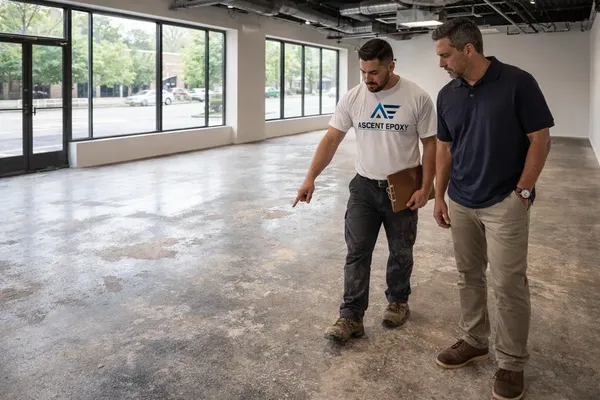
~45 minWe walk your space with you, look hard at the existing slab for cracks and old moisture stains, measure the square footage, and map the busiest hours so we can plan the phasing around them. If you flooded in a past storm, tell us — it changes the prep. Schedule a free walkthrough.
Custom System Design
1–2 daysWe match the buildup to how you operate — a commercial kitchen floor reads differently from a retail showroom or a clinic corridor. You sign off on color, finish, anti-slip texture, and the section-by-section schedule that keeps the rest of the space open while we work.
Surface Preparation
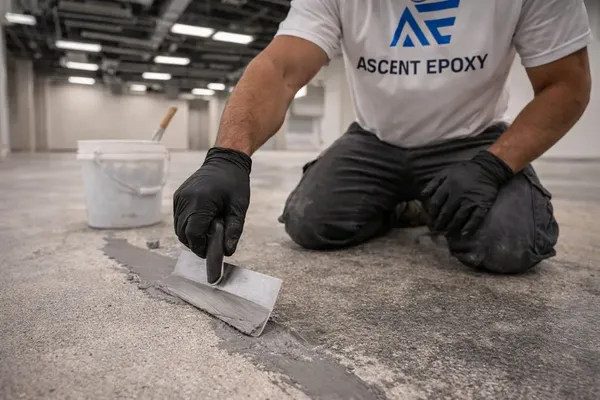
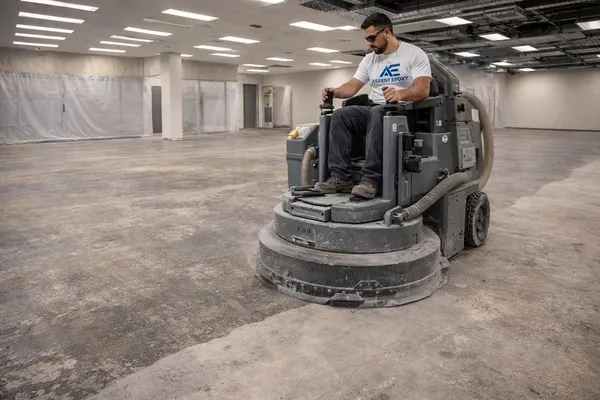
2–4 hrsThis is the step that decides whether the floor lasts. We diamond-grind the slab to a clean bond profile, fill cracks, then moisture-test the concrete — and if a damp river-parish slab reads high, we lay a vapor-barrier primer so groundwater can't push the coating loose later.
Multi-Layer Application
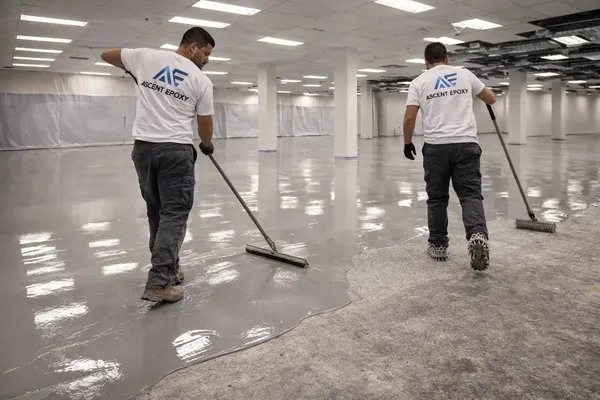
3–5 hrsThe crew lays primer, body coat, broadcast media (flake, quartz, or metallic), and a chemical- and UV-stable topcoat, building integral cove base in kitchens where the health code wants it. On phased jobs we close out one zone before opening the next, so your team never loses the whole floor at once.
Final Walkthrough & Handoff
~1 hrWe walk the finished floor with you, check adhesion and the cure, and hand over a care sheet written for your kind of space — kitchen line, sales floor, or exam room. It is backed by a written warranty with no fine print, before you ever put down a deposit.
Ready to Start? Step 1 Is Free.
Schedule your no-obligation consultation and see finish samples in your space.
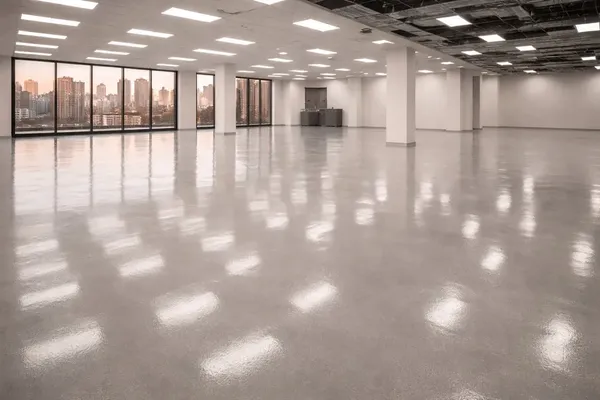
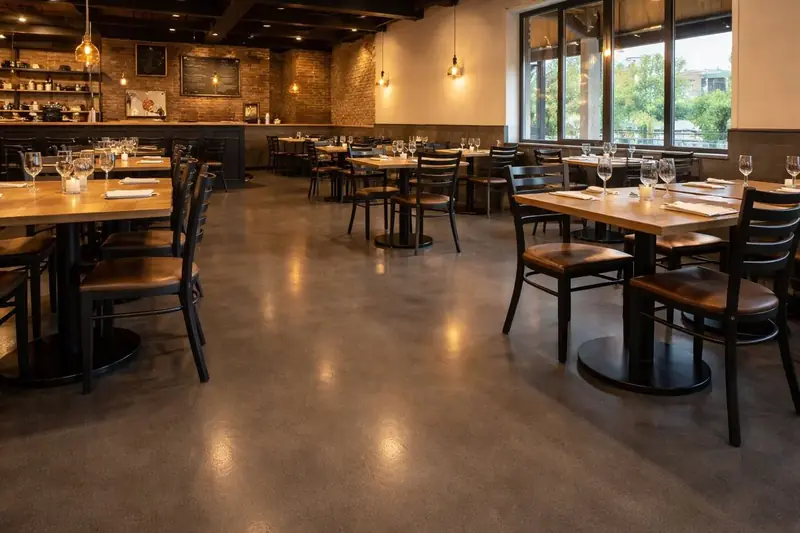
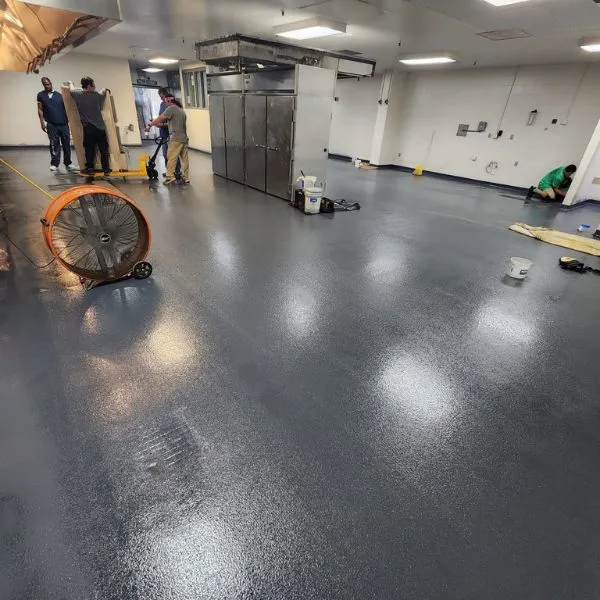
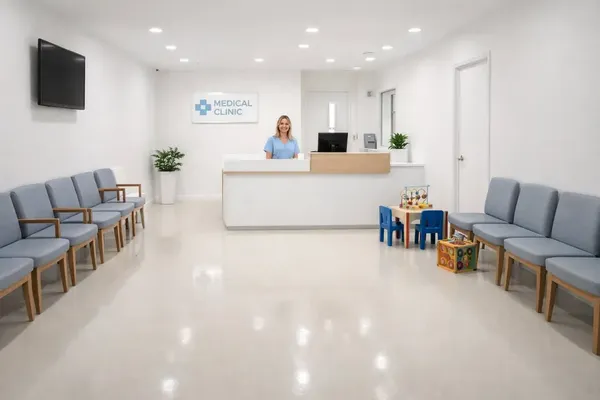
Capital-Region Floors We've Put Down
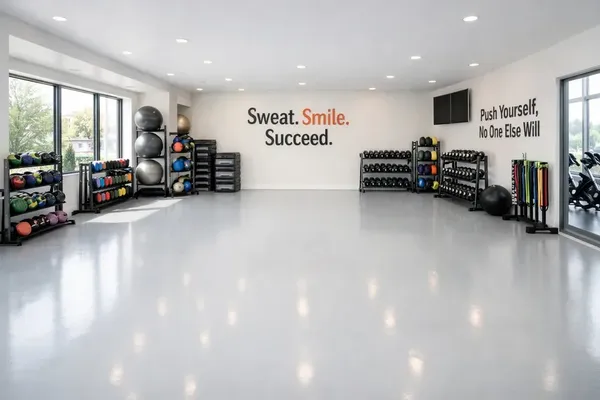
Commercial installs around Baton Rouge — restaurant lines, showrooms, office lobbies, and shop bays.
When Standard Epoxy Isn't Enough
Some Baton Rouge spaces face heat, water, and sanitation rules that a basic coating can't survive. These are the heavy-duty systems we install for food service and regulated environments.
Restaurant & Commercial Kitchen Floors
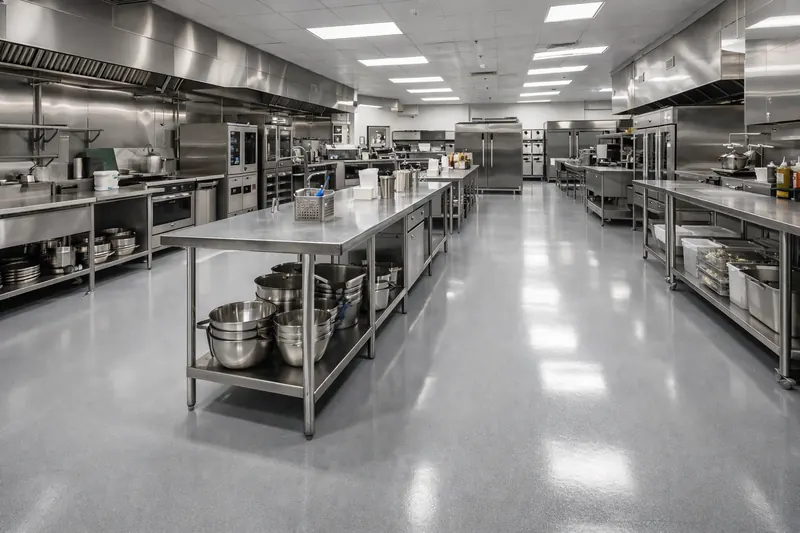
A Louisiana kitchen — whether it is a Cajun spot turning out crawfish boils or a downtown catering line — is brutal on a floor. Boiling pots and fryer oil thermal-shock the surface, the line stays wet all shift, the cleaning chemicals are harsh, and the health inspector wants a seamless, non-porous floor with nowhere for bacteria to hide. Ordinary epoxy simply does not last in that combination.
For these rooms we install systems with anti-slip texture cast right into the surface, an integral cove base that curves up the wall so there is no seam to scrub, and the drainage slope a Louisiana Department of Health inspection looks for — keeping your kitchen crew on their feet and your permit on the wall.
Processing, Packing & Plant-Support Floors
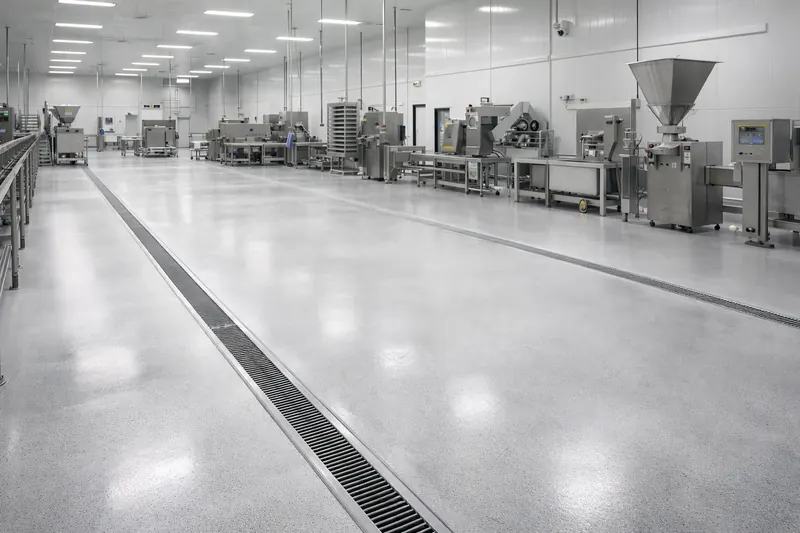
The river corridor runs on production — seafood and food processing, beverage lines, and the support facilities that feed the petrochemical plants. Those floors live under USDA and FDA rules that spell out surface porosity, chemical resistance, and cleanability, and the floor itself is a control point in your HACCP plan. One compromised surface can fail an audit and stop the line.
We install USDA-accepted systems for meat and seafood processing, dairy, beverage, and packing operations across the region — antimicrobial-additive surfaces, seamless with zero joints, resistant to clean-in-place (CIP) chemicals, with drains integrated into the slope. And because these slabs sit on the same damp, low-lying ground as everything else here, the moisture test is non-negotiable: we read every slab and set a vapor barrier before coating, so the floor doesn't delaminate from groundwater pressure six months in.
Rated 5.0★ — Baton Rouge Reviews
What capital-area business owners say after the crew clears out — verified on Google.
"Solid work, awesome floors."
"They did a metallic epoxy in my showroom. Looks spectacular and stands up to daily use. Very impressed."
"Exactly what I wanted, beautiful and functional."
Commercial Epoxy Flooring FAQ — Baton Rouge
Common questions from Baton Rouge business owners about commercial epoxy floor installation.
Commercial epoxy flooring in Baton Rouge typically costs $7 to $15 per square foot installed. The final price depends on the size of your space, the condition of the existing concrete, the type of epoxy system required, and any specialized features like anti-slip aggregate or chemical-resistant topcoats. Larger commercial spaces often benefit from lower per-square-foot pricing due to economies of scale.
For a detailed breakdown by project type, see our Baton Rouge epoxy pricing guide.
Yes, we specialize in phased installation schedules that keep your Baton Rouge business operational during the coating process. For restaurants, retail stores, and offices, we can work in sections — completing one area while you continue using the rest. We also offer weekend and after-hours installation to minimize impact on your daily operations.
Most commercial projects are completed within 3 to 5 days depending on square footage and system complexity.
Yes. Our commercial epoxy systems meet FDA and USDA guidelines for food-contact surfaces when properly installed and sealed. The seamless, non-porous finish prevents bacteria buildup and makes daily cleaning fast and effective — a major advantage for Baton Rouge restaurants navigating health code inspections.
We also offer antimicrobial additive options for commercial kitchens and food preparation areas that need an additional layer of protection.
Properly installed commercial epoxy flooring lasts 10 to 20 years in high-traffic Baton Rouge businesses. The lifespan depends on the type of traffic your space receives, the epoxy system thickness, and how well the floor is maintained.
Our commercial-grade systems use multi-layer applications with industrial topcoats designed to withstand heavy daily use without yellowing, peeling, or wearing through — even in Louisiana's humid conditions.
Yes. We serve the entire I-10 and I-12 corridor including warehouse districts, distribution centers, and commercial facilities from Port Allen through Denham Springs. Our Baton Rouge team regularly installs commercial and industrial epoxy floors in businesses throughout the greater metro area.
We also serve Prairieville, Gonzales, Central, Baker, Zachary, Walker, and communities across the Baton Rouge metro. Visit our service areas page for the full list.
Design your commercial epoxy floor in 60 seconds.
Pick your size, finish, and color. See a real preview and your Baton Rouge price range before you call.
Open Floor Studio →