Residential Epoxy Flooring in Baton Rouge — Built for Slabs That Fight Moisture From Below
A Capital Region home asks more of a floor than almost anywhere in the country: river-parish ground that holds water, summers that sit near saturation for months, and clay that swells and shrinks under the slab. We install seamless residential epoxy that is engineered around those conditions — every floor starts with a moisture reading, not a sales pitch.
Why a Baton Rouge Floor Lives or Dies at the Slab
Most epoxy that peels in this region never failed because of the coating — it failed because of what was happening underneath it. Baton Rouge sits where the Mississippi, the Amite, and the Comite drain a low, flat basin, and the gumbo clay that floors most of East Baton Rouge Parish holds water like a sponge. That clay swells in the wet season and pulls back in the dry, working the slab from below while ground moisture pushes vapor straight up through the concrete. Lay a film coating over a slab that's "breathing" like that without reading it first, and you've scheduled the failure.
So we do the unglamorous part first. Before any product touches your concrete we run a moisture reading on the slab, because around here the number is rarely zero — with dew points that sit in the 70s for much of the summer and a water table that's often only a few feet down, vapor drive is the rule, not the exception. The reading tells us what system the slab can actually carry: a standard build, or a vapor-mitigation primer underneath it for homes near the river, in Spanish Town and the older Garden District lots, or anywhere the slab took water in the August 2016 flood.
Get that right and residential epoxy becomes the most honest floor in a humid house — seamless, with no grout to grow mold and no seams for water to wick into. It's the same prep discipline we bring to an attached garage slab; for what moves the price, see the Baton Rouge epoxy cost guide.
Get a Free Quote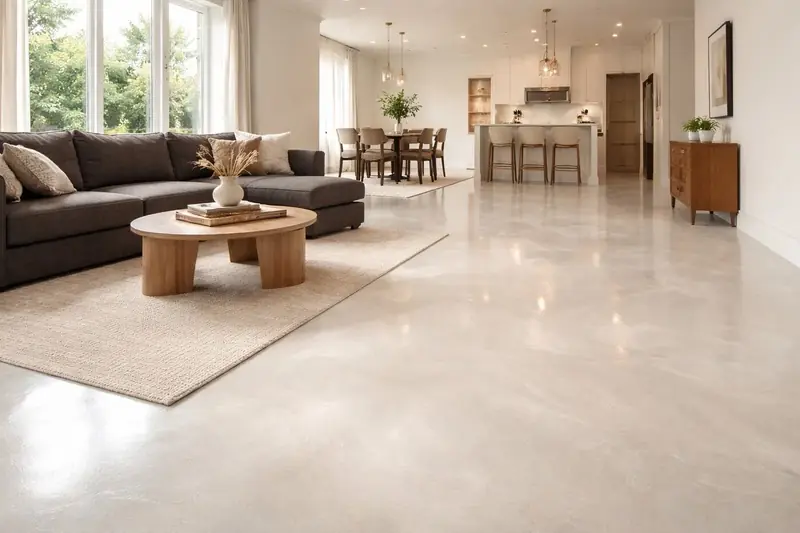
Where Epoxy Earns Its Keep in a Capital Region Home
Our housing stock isn't one thing. You've got mid-century slab-on-grade ranches in Broadmoor and Sherwood Forest, raised pier-and-beam shotguns and cottages in Mid City and the older neighborhoods, and newer subdivisions out toward Prairieville, Central, and Denham Springs. Each one asks for a slightly different floor.
Slab-on-grade living areas
In the ranches and post-war homes built right on the ground, the concrete you walk on is the same concrete fighting soil moisture. A flake or metallic floor here only behaves if the slab is mitigated first — this is the room where prep matters most.
Lanais, sunrooms & covered patios
The screened porch and back lanai do a lot of work nine months a year here. A UV-stable topcoat keeps the color from chalking under that low Gulf sun, and the seamless surface sheds an afternoon downpour without trapping standing water.
Kitchens, mud & laundry rooms
The high-traffic, high-spill rooms. No grout lines means no dark seams for mildew to set into during a humid Louisiana week, and a damp mop clears red-clay tracked in off the yard in seconds.
Raised & pier-and-beam homes
Lifted floors breathe differently than a slab, so the system changes with the substrate. On a plywood subfloor we build for movement; where there's a finished slab below the raised structure, we read it the same as any other.
Flood-recovered floors
Plenty of homes in Denham Springs, Watson, and the Amite-Comite corridor took water in 2016. A previously flooded slab can absolutely take epoxy — but only after it's been read and, if needed, mitigated. We treat that history as information, not a deal-breaker.
Attached garages & carports
The slab that takes the most abuse — hot tires, road salt off I-10, and humidity rolling in every time the door goes up. Full detail lives on our garage epoxy page.
What You Actually Get From a Properly Prepped Floor
Beauty is the easy part. In this climate, the value is in what the floor refuses to do — peel, harbor mold, or wear out early.
0 seams
Nowhere for Mildew to Live
A tiled floor in a Baton Rouge kitchen is really a grid of grout lines, and grout is where mildew sets in during a humid week. A poured epoxy floor is one continuous, non-porous sheet — there's simply no seam to colonize and no joint for water to wick into.
UV-stable
Color That Holds Under the Gulf Sun
Cheap topcoats amber and chalk fast under our long, bright summers — especially on a sunroom or porch slab. We finish with a UV-stable clear coat so a metallic swirl or flake blend still reads the same color in year five as it did on install day.
No carpet
Healthier Air in a Humid House
Carpet and the padding under it are mold reservoirs in a climate this damp, and they hold every bit of dander and pollen the season throws at them. A sealed epoxy floor gives allergens nothing to cling to — a real difference for the kids and the dogs in a long Louisiana allergy season.
Mop-only
Shrugs Off Red-Clay Season
If you've lived here through a wet spring, you know the orange-brown clay tracks in off every yard and stains anything porous. Epoxy doesn't absorb it. No waxing, no resealing, no specialty products — a damp mop pulls the clay right back up and the floor looks new again.
Resale
A Selling Point in a Flood-Aware Market
Capital Region buyers shop with moisture in mind — they've seen what 2016 did. A finished, sealed slab in the garage, sunroom, or laundry room reads as a home that's been cared for from the ground up, and it photographs far better than stained concrete or dated tile.
See the full cost guide →20+ yrs
Outlasts What the Climate Destroys
Laminate swells and lifts in this humidity, tile pops as a slab moves on shrinking clay, and carpet never fully dries out. A vapor-mitigated epoxy floor stays bonded and flat for 20+ years because the failure mode — moisture under the coating — was handled before the first coat went down.
How humidity affects durability →How We Build a Floor That Survives Here
Five steps, and the first two are the ones that decide everything. We read the slab and prep it for this ground before any color goes down — because in a basin this wet, the difference between a two-year floor and a twenty-year floor is made before the pretty part starts.
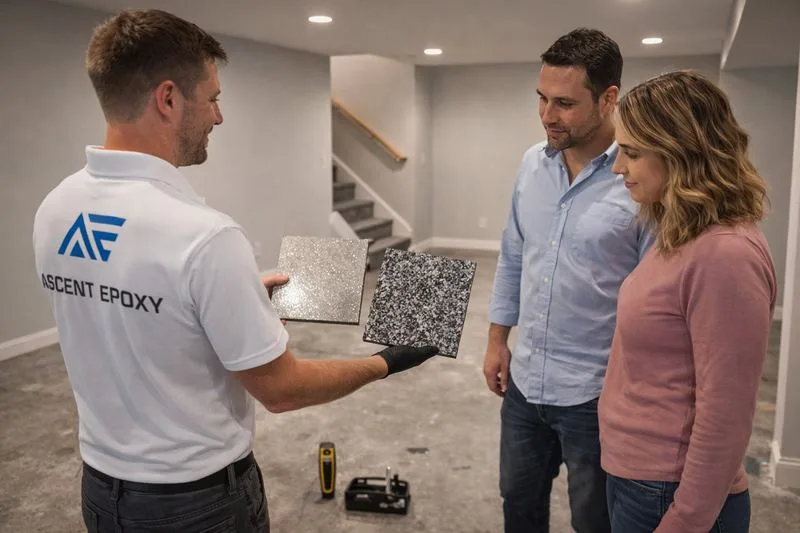
In-Home Walk & Moisture Reading
~45 minWe come to your home, read the slab for moisture, ask whether the house took water in 2016, look at the substrate, and only then talk finishes. You leave with a written quote and an honest read on whether the slab needs mitigation — no guessing. Schedule yours free.
Grind & Vapor Mitigation
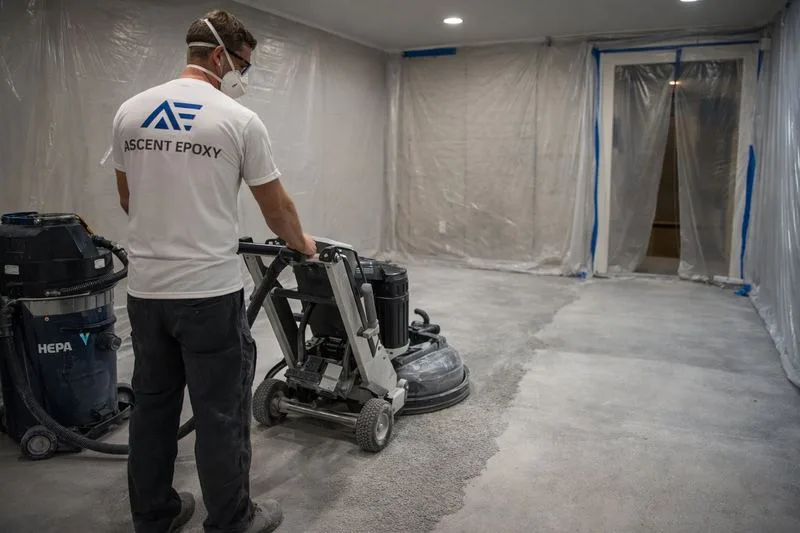
2–4 hrsDiamond grinding opens the concrete to a profile the coating can lock into. Then, if your reading came back high — common on a slab sitting over our water table — we lay a vapor-mitigation primer first. That barrier is the single thing that stops Baton Rouge ground moisture from pushing a finished floor loose later.
Repair Clay-Movement Cracks
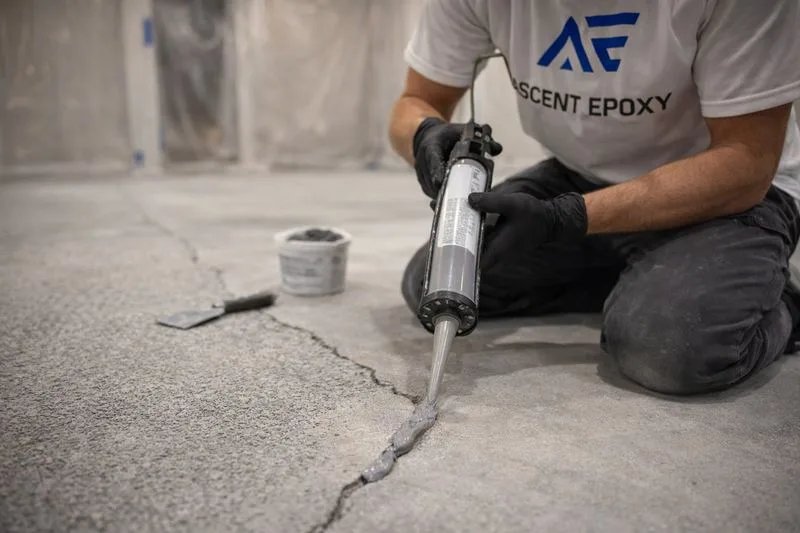
30–60 minSlabs that ride on expansive clay almost always carry hairline cracks from years of swell-and-shrink. We chase them out and fill with structural-grade epoxy filler, and on a flood-recovered floor we deal with the subsurface damage before any coating goes over the top.
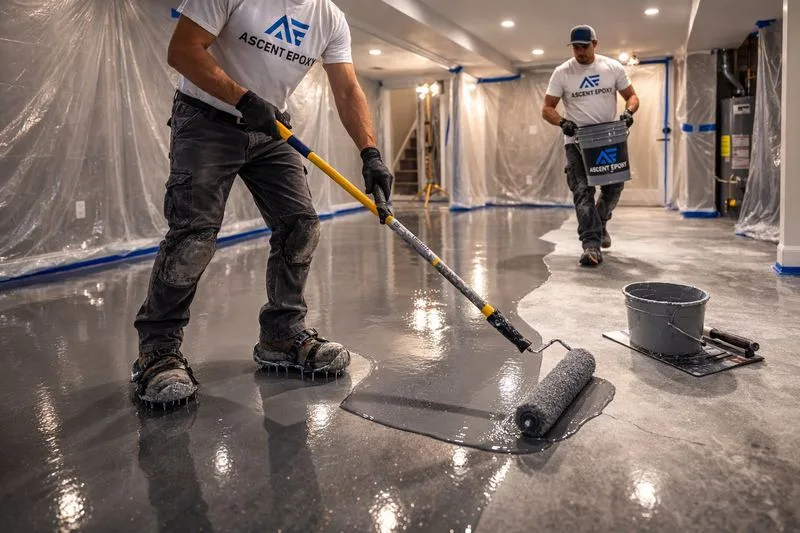
Coat Inside the Humidity Window
3–5 hrsEpoxy cures by chemistry, and chemistry hates a saturated afternoon. We lay primer, body coat, and topcoat when dew point and slab temperature line up — sometimes that means an early start to beat a summer storm. Rushing a coat in the wrong window is how floors blush and cloud; we don't.
Cure, Walk, Live On It
24–72 hrsThe floor cures over 24–72 hours, with the high end reserved for the muggiest stretches when we let it take its time rather than force it. You get plain-English care instructions and a written warranty so you know exactly what's covered.
Start With the Slab Reading — It's Free.
No obligation. We'll read your slab, hold finish samples against your space, and tell you straight whether it needs mitigation.
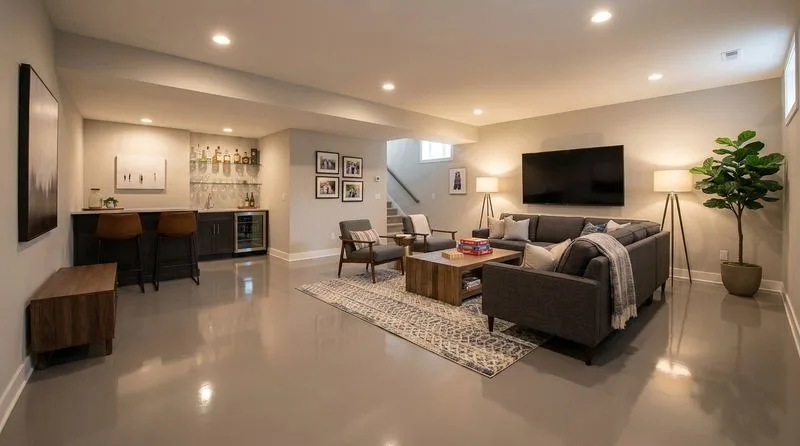
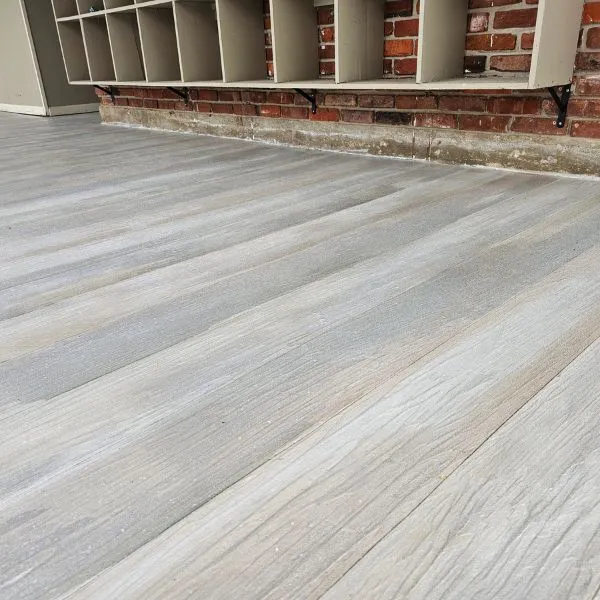
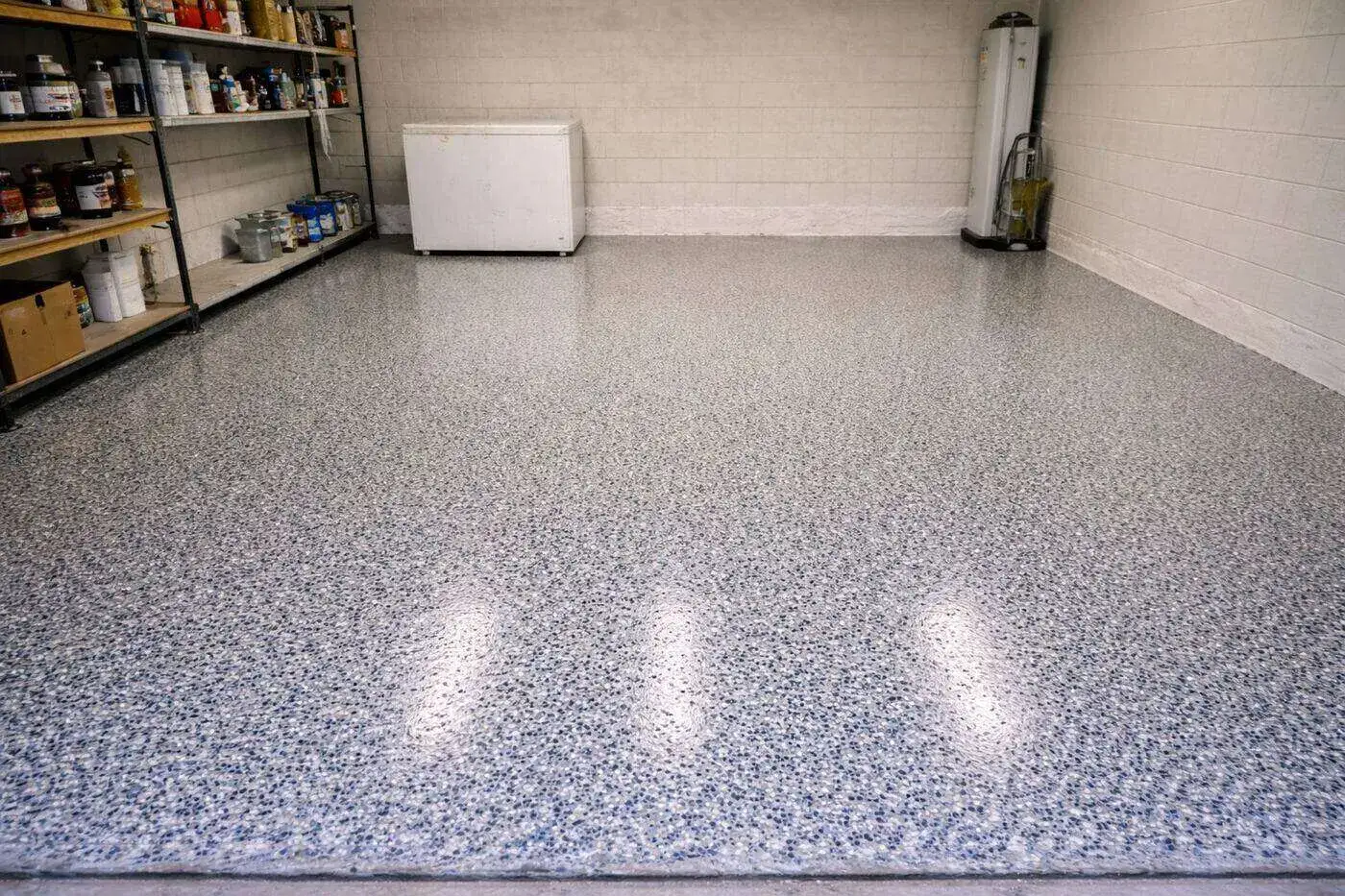
Residential Epoxy Flooring in Baton Rouge
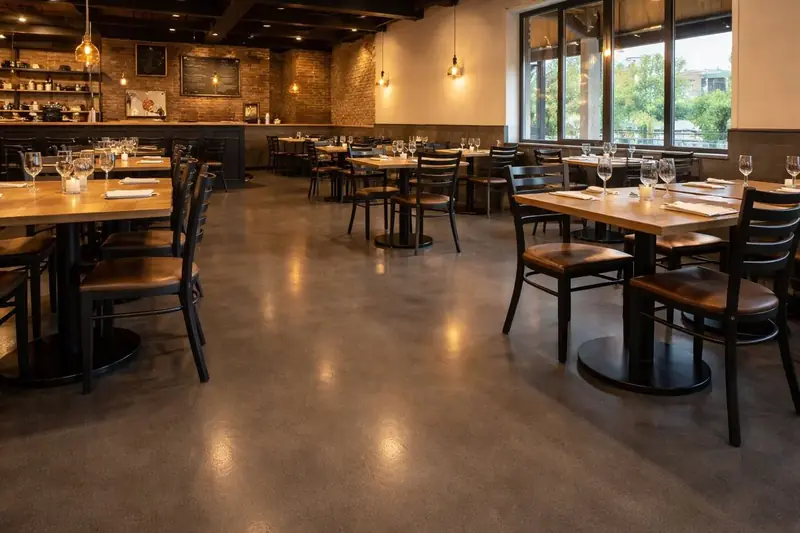
Residential floors like the ones we install in Baton Rouge homes.
Rated 5.0★ — Baton Rouge Reviews
Real reviews from real Baton Rouge homeowners — verified on Google.
"Solid work, awesome floors."
"They did a metallic epoxy in my showroom. Looks spectacular and stands up to daily use. Very impressed."
"Exactly what I wanted, beautiful and functional."
Residential Epoxy FAQs — Baton Rouge
Common questions from Baton Rouge homeowners about residential epoxy flooring.
Every residential floor is priced after a free on-site measurement, because the price depends on the size of the room, the condition of your slab (cracks, old coatings, moisture), the finish you choose, and the prep the concrete needs. Metallic epoxy finishes run higher than solid-color systems, and crack repairs and moisture mitigation also affect your final price. Contact us at (337) 243-3062 for a free, no-obligation quote and an exact written price tailored to your home.
Epoxy flooring is an excellent choice for Baton Rouge kitchens. It creates a seamless, waterproof surface that resists stains from cooking oils, wine, and food spills. Unlike tile, there are no grout lines where mold can grow in Louisiana's humid environment. Epoxy is also easy to clean and available in decorative finishes that complement any kitchen design.
In most cases, existing flooring materials like tile or vinyl must be removed before epoxy application to ensure proper adhesion. We grind the concrete substrate and perform moisture testing, which is critical in Louisiana where slab-on-grade foundations are common. Our team evaluates your existing floor during the free consultation and recommends the best preparation approach. Call (337) 243-3062 to schedule yours.
A professionally installed residential epoxy floor typically lasts 20 years or more with proper care. Longevity depends on the quality of surface preparation, the coating system used, and how the floor is maintained. In Baton Rouge, our climate-tested installation process accounts for humidity and slab moisture to prevent premature peeling or delamination.
Epoxy can be successfully applied to previously flooded slabs, but thorough evaluation is essential. We perform calcium chloride moisture testing and inspect for damage from the 2016 floods or subsequent weather events. If moisture levels are elevated, we apply a moisture mitigation system before coating. Many Baton Rouge homes that flooded have been successfully resurfaced with epoxy. Call (337) 243-3062 for a free slab assessment.
Design your residential epoxy floor in 60 seconds.
Pick your size, finish, and color. See a real preview and your Baton Rouge price range before you call.
Open Floor Studio →