Epoxy Floor Repair in Baton Rouge — Fix the Peel at Its Source
Peeling, bubbling, or hot-tire-lifted epoxy? On Baton Rouge's damp, clay-heavy slabs — especially anything that flooded in 2016 — the failure starts underneath. We test the slab, fix the real cause, and re-coat so it holds. Free assessments across the Capital Region.
Why Baton Rouge Floors Fail — and How We Fix Them for Good
If your epoxy is peeling, blistering, or lifting in sheets, the problem usually started under the slab — not on top of it. Baton Rouge sits on the low, water-heavy ground of the lower Mississippi between the river levee and the Amite and Comite basins, and that geography is what quietly destroys coatings here. A high water table keeps slabs damp from below, the region's expansive clay (the "gumbo" soil locals know well) shifts with every wet-then-dry cycle, and the long subtropical summer keeps relative humidity high for months at a stretch. None of that shows up the day a floor is installed. It shows up six months later as a hollow spot near the garage door or a chalky white bloom across a kitchen.
The 2016 flood made this worse for a large share of the parish. Thousands of slabs in East Baton Rouge, Livingston, and Ascension took on water — many in neighborhoods that had never flooded before — and those slabs hold residual moisture for years. A coating laid over an untested post-flood slab is borrowing against that trapped water, and it almost always comes due as delamination. Older Mid City, Garden District, and Spanish Town homes add their own twist: slabs poured before modern vapor barriers were standard, finished in eras when "prep" meant a quick acid wash rather than a diamond grind.
Houston has repaired enough of these floors across the Capital Region to read the failure from the symptom. Edge curl and bubbling point one direction; map-cracking that traces slab joints points another; an amber, flaking topcoat points to a third. We don't re-coat over the evidence — we identify whether you're dealing with moisture vapor transmission, slab movement, contamination, or a coating that was simply wrong for Louisiana conditions, then we correct the cause so the repair actually holds.
Repair Work Built for Capital-Region Conditions
From flood-soaked slabs in Denham Springs to forklift-worn floors along the river industrial corridor — what we test for, and what we fix.
Root cause
Read the Failure First
Curling edges, hollow blisters, or joint-tracing cracks each tell a different story. We diagnose the real driver — trapped slab moisture, gumbo-soil movement, or a coating wrong for the Gulf South — before we touch a grinder.
How humidity affects durability →Post-flood
Flood-Slab Moisture Mitigation
Slabs that took water in 2016 — or sit near the Amite, Comite, or river backwater — stay damp for years. We measure the vapor drive, then install a mitigation membrane that seals it off so the new coating bonds for good.
Down to gray
Strip, Grind & Re-Coat
When a coating is too far gone, we diamond-grind it to bare concrete — never an acid wash — repair the slab, and rebuild with a resin chosen for Capital-Region heat and moisture.
Targeted
Spot & Hot-Tire Repair
Hot-tire pickup at the garage threshold, chips, and crack lines rarely mean the whole floor is shot. We patch and re-blend the failed zones — common in LSU-area rentals and busy two-car garages — without redoing the room.
Resurface
Recoat & Maintenance Plans
A worn topcoat doesn't always need a teardown. We scuff-sand and re-topcoat to restore gloss and slip resistance, then set an inspection and recoat rhythm matched to your traffic — warehouse, showroom, or home garage.
50–70% less
Industrial & Commercial Resurfacing
Plant floors along the river chemical corridor and Port-area warehouses take chemical splash, forklift traffic, and thermal shock. Resurfacing the worn zones beats tearing out a slab and shutting down a line — we'll tell you honestly which one you need.
See full pricing guide →Our Repair Process, Step by Step
Built around what actually fails Baton Rouge floors — slab moisture and soil movement — so the fix outlasts the next wet season.
On-Site Walk & Inspection
~45 minHouston walks the floor with you anywhere from the Garden District to Gonzales, maps where it's failing, and asks whether the slab flooded in 2016. No cost, no obligation. Schedule yours free.
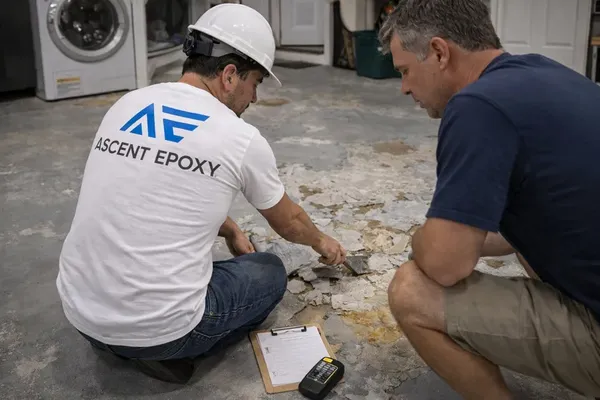
Moisture & Adhesion Testing
1–2 hrsWe run calcium chloride and relative-humidity probes plus pull-off adhesion checks — the step most Capital-Region failures skipped. That tells us whether the culprit is vapor drive, soil-movement cracking, contamination, or a mismatched coat.
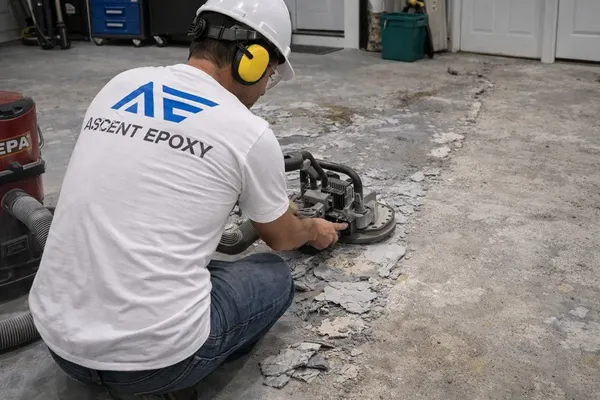
Removal & Slab Prep
2–4 hrsLight failures get a scarify-and-recoat; failed systems come off to bare gray with diamond grinding. On a damp or post-flood slab, the moisture-mitigation membrane goes down before anything else — this is the step that stops the peel from coming back.
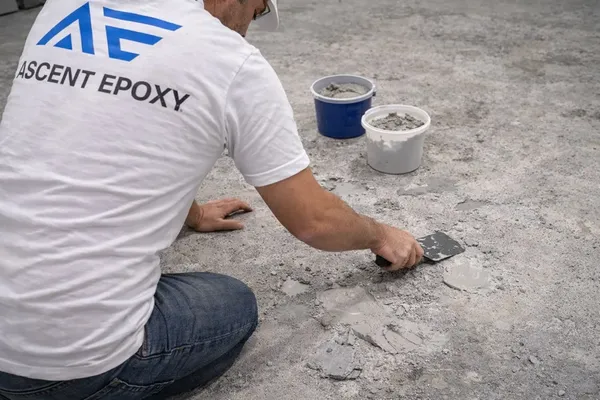
Crack Repair & New Buildup
3–5 hrsWe rout and fill cracks, rebuild gouged and hot-tire-lifted areas, then lay a coat system matched to that floor's job — a chemical-resistant industrial buildup, or a flake/quartz finish for a home that has to ride out Louisiana humidity.
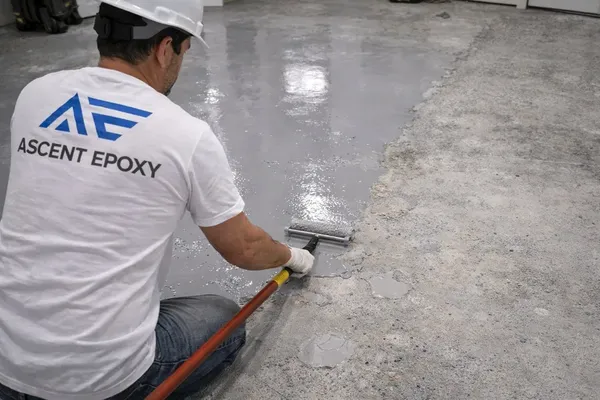
Cure & Written Warranty
24–72 hrsHumid Gulf South air slows resin cure, so we time the topcoat and the dew point rather than rushing the return-to-service. Then you get a written warranty in plain terms — no fine print that disappears when you call back.
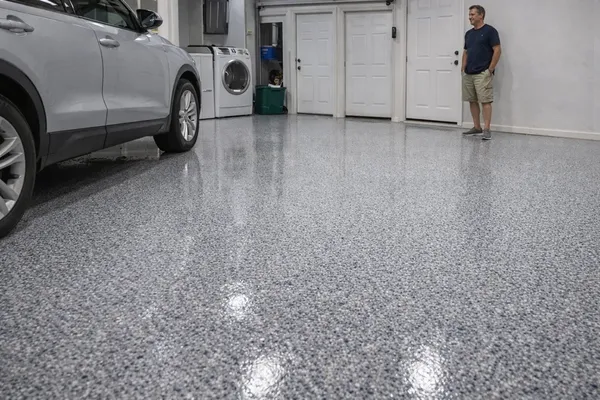
Stop Re-Coating the Same Peel.
Have us test the slab and tell you what your Baton Rouge floor actually needs — no charge to find out.
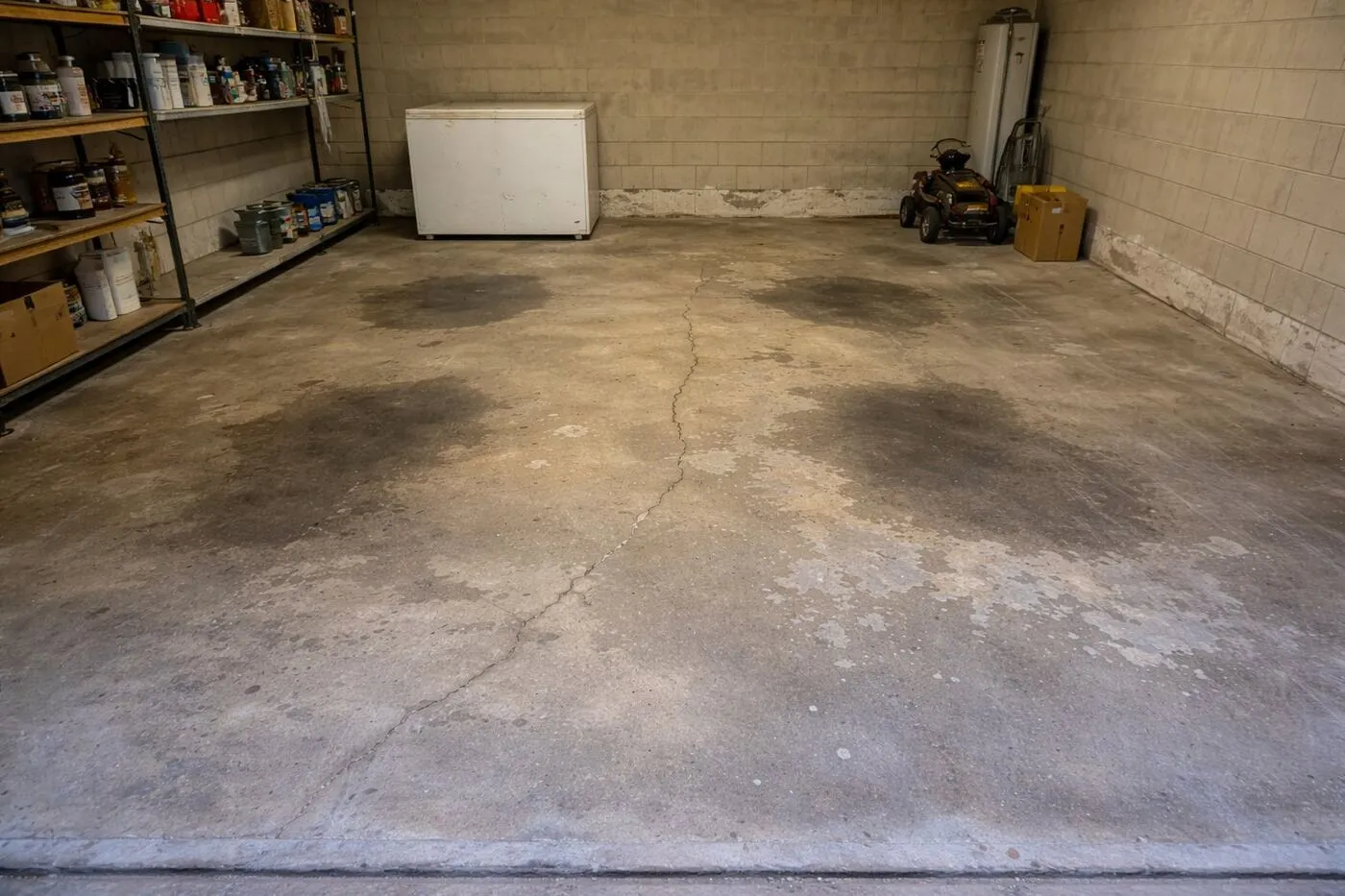
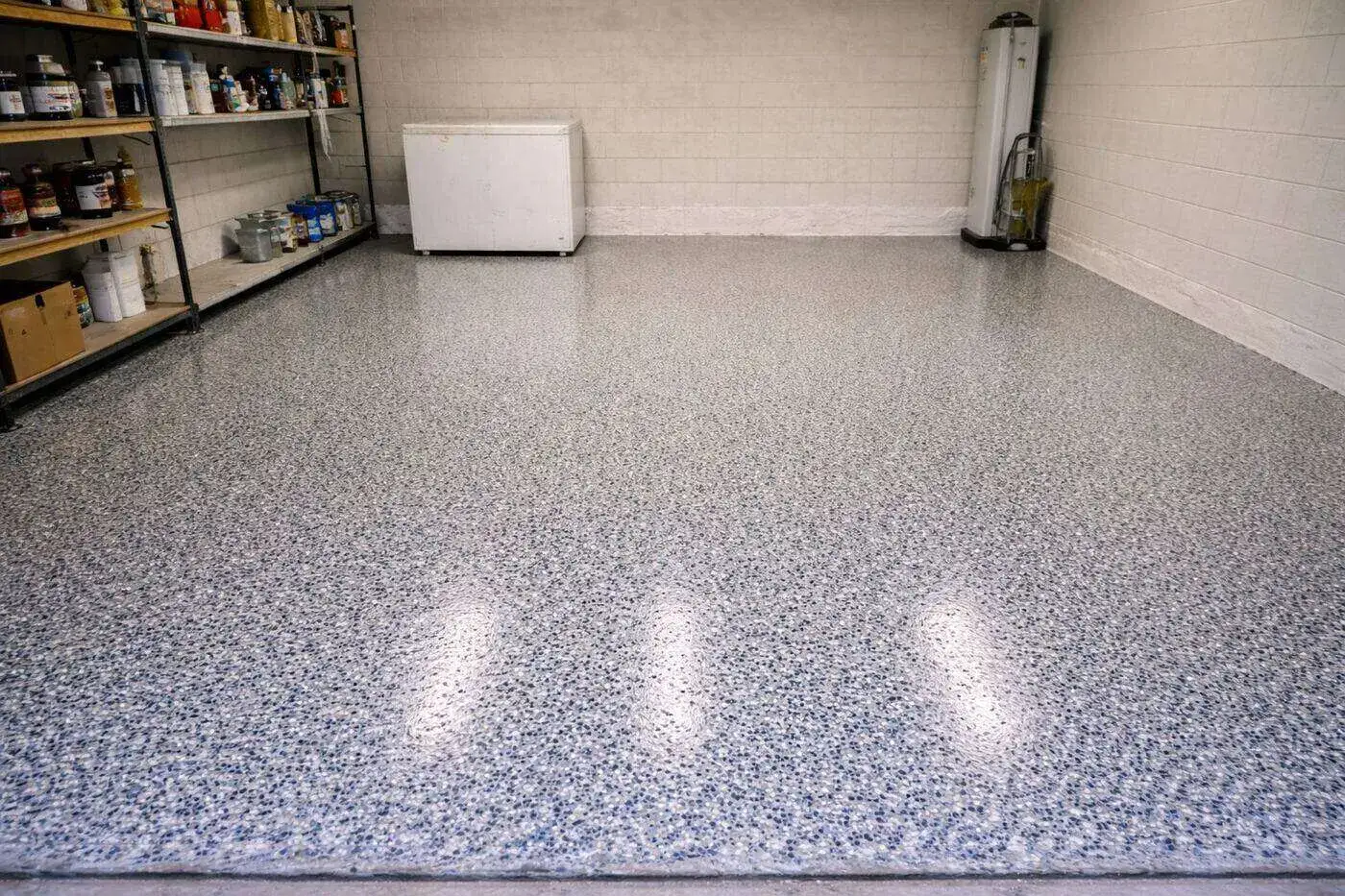
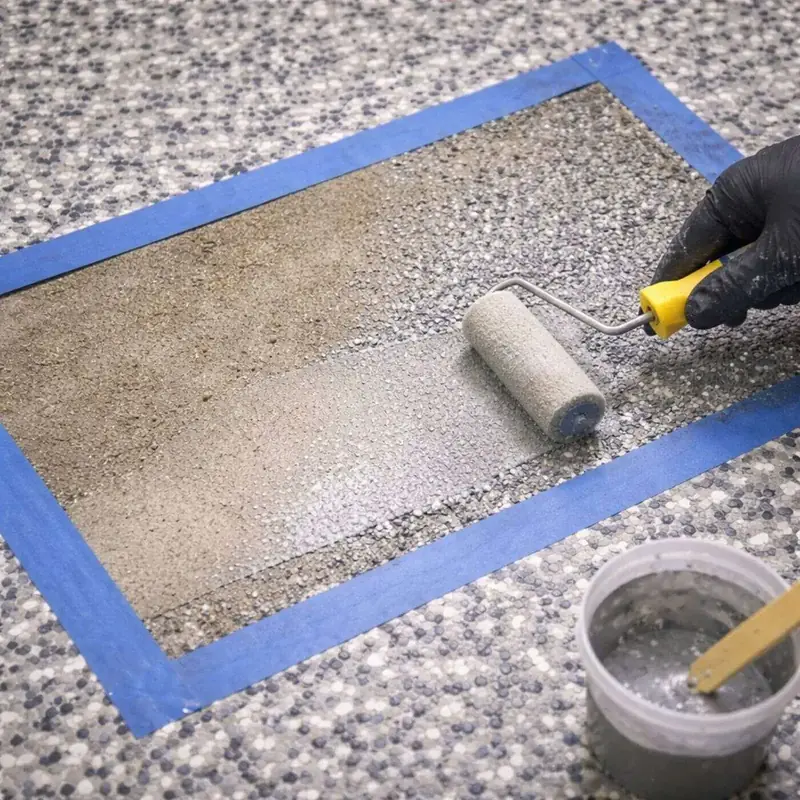
Repair & Restoration Work Across the Capital Region
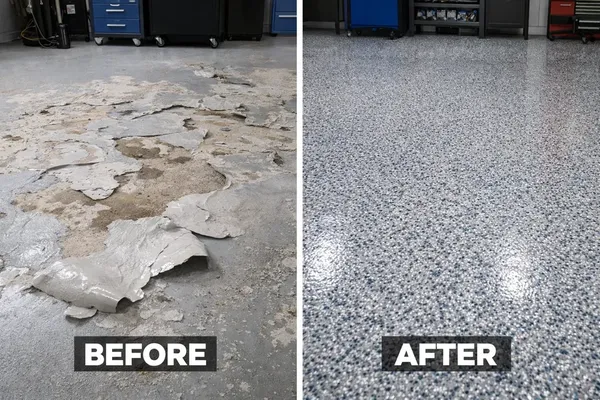
Before-and-after results from peeling garages, worn showrooms, and resurfaced slabs in and around Baton Rouge.
Rated 5.0★ — Baton Rouge Reviews
Real reviews from real Baton Rouge homeowners — verified on Google.
"Solid work, awesome floors."
"They did a metallic epoxy in my showroom. Looks spectacular and stands up to daily use. Very impressed."
"Exactly what I wanted, beautiful and functional."
Epoxy Repair FAQs — Baton Rouge
Common questions about epoxy floor repair and maintenance in Baton Rouge.
Louisiana's extreme humidity and moisture vapor transmission (MVT) through concrete slabs are the number one cause of epoxy failure in Baton Rouge. When installers skip proper moisture testing or use coatings incompatible with high-moisture environments, the bond between epoxy and concrete weakens. Moisture trapped beneath the coating creates hydrostatic pressure that causes peeling, bubbling, and delamination.
Post-flood slabs and older homes without modern vapor barriers are especially vulnerable. Ascent Epoxy tests every slab for moisture before recommending a repair strategy.
It depends on the condition of the existing coating and the underlying concrete. In some cases, we can scarify the surface and apply a new system directly over the old one. However, if the previous coating is severely delaminated, contaminated, or applied over untreated moisture issues, a full strip-down to bare concrete is necessary for a lasting repair.
We perform on-site testing to determine the right approach for your specific floor — no guesswork.
Costs vary depending on the scope of damage, square footage, whether a full strip is needed, and if moisture mitigation is required. Spot repairs start significantly lower than full re-coats. In many cases, repair is a fraction of the cost of a complete new installation.
We provide free on-site assessments with transparent pricing so you know exactly what to expect before any work begins. See our Baton Rouge pricing guide for general ranges.
Yes. Many Baton Rouge slabs affected by the 2016 flood have chronic moisture issues that cause coatings to fail repeatedly. We specialize in post-flood slab preparation, including calcium chloride moisture testing, moisture mitigation systems, and coatings specifically engineered for high-MVT environments.
Our process addresses the root cause so your new coating bonds permanently instead of peeling again within months.
Yes. We offer ongoing maintenance plans that include periodic inspections, cleaning guidance, minor touch-ups, and re-coating schedules tailored to your floor's traffic level and environment. Maintenance plans help extend the life of your epoxy floor by years and catch small issues before they become costly repairs.
Contact us for a customized maintenance plan for your home or business.
Design your epoxy floor in 60 seconds.
Pick your size, finish, and color. See a real preview and your Baton Rouge price range before you call.
Open Floor Studio →