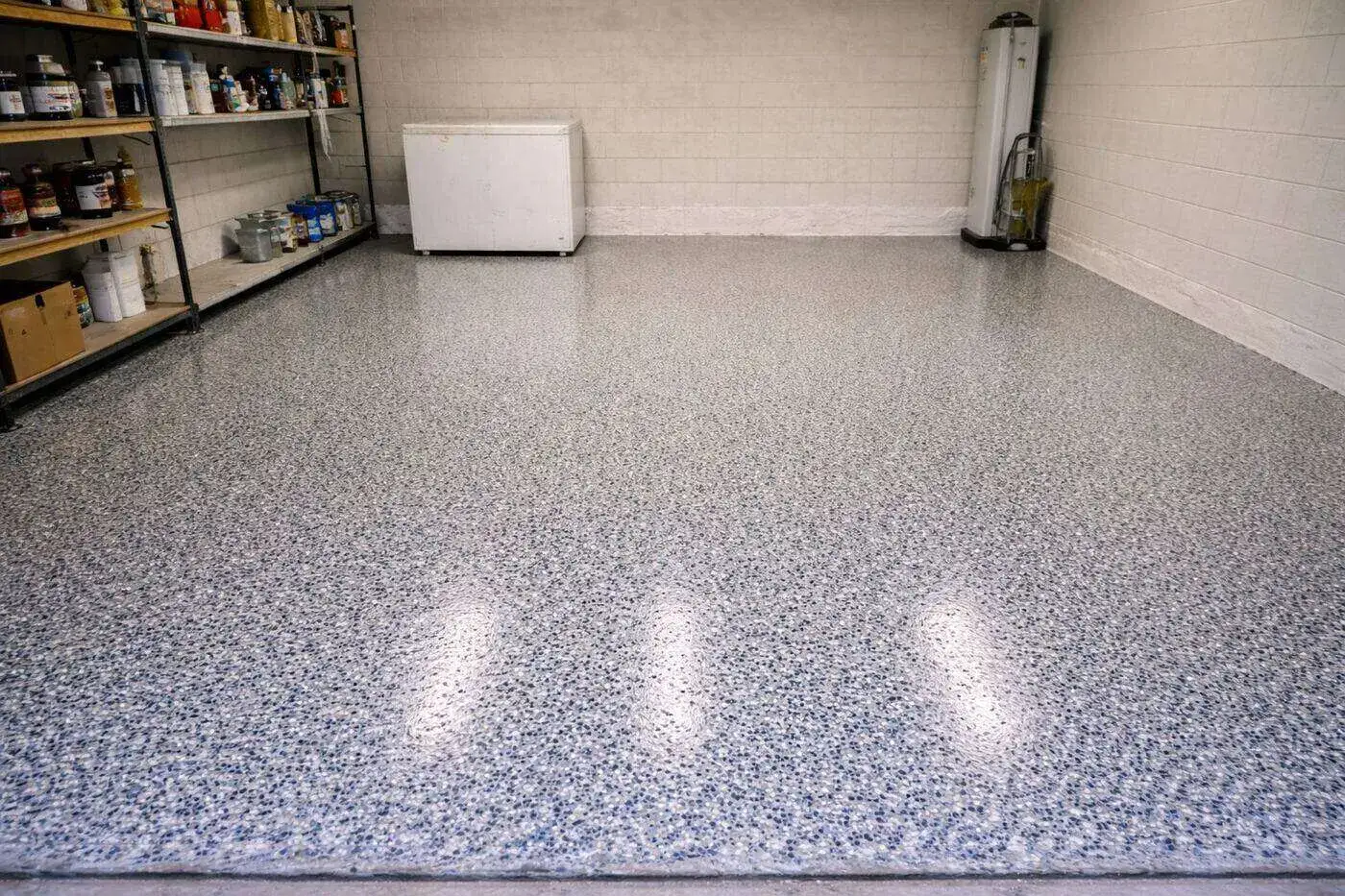
In Baton Rouge, neither pure epoxy nor pure polyaspartic wins outright — the floor that performs best is a hybrid: an epoxy base coat for thickness and adhesion, finished with a UV-stable polyaspartic topcoat that resists yellowing and cures fast in our humidity.
If you have been shopping for a garage or shop floor in the Baton Rouge area, you have run into two names over and over: epoxy and polyaspartic. Some installers swear by one, some by the other. The truth is less dramatic: they are two different chemistries with two different jobs, and the smartest floors in South Louisiana put both to work.
This guide breaks down what each coating is, how they compare, and why our Gulf-Coast climate changes the answer. By the end you will understand why most professional Baton Rouge garage floors use an epoxy base with a polyaspartic topcoat, what that costs locally, and how to pick the right setup. To skip straight to a recommendation for your slab, call us at (337) 243-3062 for a free assessment.
What Each Coating Actually Is
They are often described as competitors, but they were engineered to solve different parts of the same problem.
What Epoxy Is
Epoxy is a thermoset coating made by mixing a resin and a hardener. As they react, they cure into a thick, rigid, glass-hard film that bonds tightly to prepared concrete. That thickness is epoxy's signature strength: a single base coat lays down far more film build than most other systems, so it fills minor imperfections, levels a slab visually, and creates a tough, chemical-resistant foundation.
The trade-offs are real. Epoxy cures slowly, often needing a day or more between coats and several days before a vehicle returns. It is rigid rather than flexible, so it is less forgiving of slab movement. And, importantly for Louisiana, bare epoxy is not UV-stable: left as the final exposed layer near a sunny garage door, it can amber or yellow over the years. None of this makes epoxy a poor choice — it makes it an excellent base coat and a questionable final topcoat.
What Polyaspartic Is
Polyaspartic is a type of aliphatic polyurea. That word "aliphatic" is the key to its value in Baton Rouge: aliphatic chemistries are UV-stable, so they do not yellow or amber in sunlight. Polyaspartic also cures remarkably fast, often allowing foot traffic within hours and vehicle traffic within about a day, and it is more flexible than epoxy, tolerating the movement and thermal expansion a slab sees through Louisiana's hot summers.
It has trade-offs of its own. It is more expensive per gallon than epoxy, and each coat goes on relatively thin, so matching an epoxy base's total film thickness takes more coats and material. Its fast cure also means a shorter, less forgiving working window that rewards an experienced applicator. These qualities make polyaspartic an outstanding topcoat — the protective, UV-stable, fast-curing final layer — even though coating the entire floor with it is not always the most cost-effective path.
Epoxy vs. Polyaspartic: Head-to-Head Comparison
The table below lays the two chemistries side by side on the properties that actually affect how your floor looks and lasts in Baton Rouge. Read it less as a scorecard and more as a map of which material is suited to which role.
| Property | Epoxy | Polyaspartic |
|---|---|---|
| Cure time | Slow — hours to a day between coats; several days to full cure | Fast — recoat in 1–2 hours; foot traffic same day, vehicles in ~24 hours |
| UV stability / yellowing | Not UV-stable; can amber or yellow in sunlight | UV-stable (aliphatic); will not yellow |
| Build thickness per coat | High — thick film build in a single coat | Lower — thin per coat; more coats to match epoxy build |
| Abrasion resistance | Very good; hard, rigid surface | Excellent; hard wear surface, often used as the sacrificial top layer |
| Flexibility | Rigid | More flexible; tolerates slab movement and thermal swings |
| Temperature application window | Narrower; sensitive to cold and high humidity during cure | Wider; cures across a broader temperature range |
| Cost per sq ft | Lower material cost per coat | Higher material cost per gallon |
| Best use | Base coat — build, adhesion, foundation | Topcoat — UV protection, fast return to service |
A pattern emerges across the rows. Epoxy wins on build thickness and material cost; polyaspartic wins on cure speed, UV stability, and flexibility. No single column is best at everything, which is the whole point: the properties that make epoxy a strong base are the same ones that make it a weak final layer, and the properties that make polyaspartic an expensive way to build thickness are the ones that make it the ideal protective top.
This is why the "epoxy versus polyaspartic" framing misleads. They are not competing for the same job — epoxy is competing to be your base coat, polyaspartic to be your topcoat. Once you see it that way, the question stops being "which one do I pick?" and becomes "how do I combine them?" It is also why you should be cautious of any quote pushing one chemistry as a cure-all: a floor built entirely from one material usually reflects what the installer stocks, not what your slab needs.
Why the Topcoat Matters in Gulf-Coast Humidity
In a dry climate, the topcoat decision is mostly cosmetic. In Baton Rouge, it is structural to how long your floor survives. Louisiana's average relative humidity sits near 74 percent, summers are long and intense, and many slabs across East Baton Rouge Parish sit over a high water table that pushes moisture up from below. Those three facts make the topcoat the most consequential layer on the floor.
Start with the sun. A garage door facing south or west takes hours of direct Louisiana sunlight every day, and that light reaches the strip of floor just inside the door. A bare epoxy surface there can amber and yellow over the years — the single most common reason an older garage floor looks discolored near the threshold while the rest still looks fine. A polyaspartic topcoat is aliphatic and UV-stable, so it shrugs off that exposure and keeps the color you chose.
Then there is the cure window. A slow epoxy cure in high humidity is a liability: while the surface is still soft and tacky, ambient moisture and moisture rising through the slab have more time to interfere with the film. Slow-curing coatings are also prone to amine blush — a hazy, sometimes greasy film that forms as the coating reacts with airborne moisture. A fast-curing polyaspartic topcoat slams that window shut, getting the surface hard and sealed before humidity can cause trouble.
Finally, the topcoat sheds water and resists the daily wear of a Gulf-Coast garage. A dense, UV-stable polyaspartic top layer beads water, wipes clean, and takes the abrasion of foot and tire traffic so the epoxy base underneath stays protected. In a climate this wet and this sunny, the topcoat is not a finishing touch — it is the layer doing the hardest work. Our guide to Louisiana humidity and epoxy flooring covers how our climate drives these decisions.
Not Sure Which System Your Slab Needs?
Every Baton Rouge slab is different. Call for a free, on-site assessment and an honest recommendation — epoxy base, polyaspartic topcoat, or the hybrid built for our climate.
The Hybrid System That Wins
Put everything above together and the winning system designs itself. The configuration most professional Baton Rouge installers reach for is a hybrid: a diamond-ground slab, an epoxy base coat, a decorative flake or quartz broadcast, and a polyaspartic topcoat sealing the whole thing. Each layer does the job it is best at. The epoxy base carries the build and the bond, gripping the concrete to create a durable foundation at a sensible material cost. The flake or quartz broadcast adds slip-resistant texture, hides hot-tire marks, and gives the floor its finished, granite-like look. The polyaspartic topcoat then locks everything in with a UV-stable, fast-curing, water-shedding wear surface that takes the sun, the abuse, and the humidity so the layers beneath it last.
Compare that to the alternatives. A pure-epoxy floor saves a little money but leaves a non-UV-stable surface exposed to Louisiana sun, risking yellowing near the door and a slow cure that fights our humidity. A pure-polyaspartic floor performs beautifully but pays a premium per gallon to build thickness an epoxy base provides more cheaply. The hybrid captures the strengths of both — epoxy's affordable build and adhesion, polyaspartic's UV stability and speed — while sidestepping each one's weaknesses. It is not an upsell invented to pad a quote; it is the configuration the chemistry and the climate both point to.
What Sets the Cost in Baton Rouge
Pricing is where the trade-offs become concrete. Here is how the choice between systems plays out on the bottom line in the Baton Rouge market.
- Solid-color epoxy: The most affordable system, with a clean glossy finish ideal for utility garages and storage areas.
- Decorative flake epoxy: The most popular garage configuration, with broadcast flake that hides imperfections and adds slip resistance.
- Polyaspartic topcoat upgrade: a modest add-on over a standard topcoat. This is the single most valuable upgrade in our climate, buying UV stability and a faster return to service.
- Full polyaspartic system: Polyaspartic resin used through the build, delivering the fastest cure and the broadest application window at a higher material cost.
To translate that into a real project, take a typical two-car garage of 400 to 600 square feet. The price of a complete system in that space depends on slab condition, the coating system you choose, and whether any moisture mitigation is required first, which is why it is set after a free on-site measurement. The hybrid — an epoxy base with a flake broadcast and a polyaspartic topcoat — delivers the longest-lasting result for the money.
Notice where the value sits. The polyaspartic topcoat upgrade is a small line item relative to the whole job, yet it protects against the most common long-term failures here: yellowing in the sun and premature wear at the door. Spending a little more on the right topcoat is almost always cheaper than refinishing a floor that ambered or wore out early. For a full breakdown of what drives the final number, see our Baton Rouge epoxy flooring cost guide.
Which Should You Choose?
The right answer depends on how you use the space. Here is how we guide Baton Rouge homeowners and business owners by use case.
A Utility Garage or Storage Space
If the space is mostly for storage, a workbench, and the occasional vehicle, a solid-color or flake epoxy system is a sound, budget-friendly choice. That said, in Baton Rouge we still recommend at least a polyaspartic topcoat on the strip near the door, because even a "utility" garage opens to the Louisiana sun every day. The hybrid is the safer long-term call almost everywhere here.
A Show Garage or Showroom
If the floor is meant to be seen — a show garage, a home gym, a boutique showroom — the hybrid with a premium flake or metallic base and a polyaspartic topcoat is the clear pick. You get the depth and decorative range of epoxy with the color stability of a UV-safe top layer, so the floor still looks new years from now even in a sun-lit space.
A Commercial or High-Traffic Floor
For a commercial space — a shop, a retail floor, a kitchen — abrasion resistance, chemical resistance, and easy cleaning matter most, and downtime is expensive. A hybrid with a quartz or flake broadcast and a tough polyaspartic topcoat checks every box, and the fast topcoat cure helps you reopen sooner. Where food safety or anti-slip standards apply, the broadcast and topcoat are specified to suit.
A Fast-Turnaround Job
When you need the floor back in service quickly, polyaspartic's fast cure is the deciding factor. A full polyaspartic system, or an epoxy base with a polyaspartic topcoat on an accelerated schedule, can take foot traffic the same day and vehicles in about a day. For a single-day garage turnaround in good conditions, leaning harder on polyaspartic is the right move.
Frequently Asked Questions
Is polyaspartic better than epoxy?
Neither is simply better — they do different jobs. Epoxy builds a thick, hard, chemical-resistant base that bonds beautifully to prepared concrete. Polyaspartic cures fast and stays UV-stable, which makes it the ideal topcoat. In Baton Rouge, the floor that performs best is not pure epoxy or pure polyaspartic but a hybrid: an epoxy base coat carrying the build and adhesion, finished with a polyaspartic topcoat that resists yellowing and handles our heat and humidity.
Why not use only polyaspartic?
A full polyaspartic system works, but it costs more per square foot and each coat goes on thin, so reaching the same total film build as an epoxy base takes more material and a faster, less forgiving working window. Using epoxy for the base gives you most of the thickness and adhesion at a lower material cost, then a polyaspartic topcoat adds the UV protection and fast cure where they matter most. You get the strengths of both without paying for polyaspartic through the entire build.
Does polyaspartic yellow in the Louisiana sun?
No. Polyaspartic is an aliphatic chemistry, which means it is UV-stable and will not amber or yellow under sunlight. That is exactly why we recommend it as the topcoat in Baton Rouge, where garage doors face long hours of intense Gulf-Coast sun. A bare epoxy topcoat, by contrast, can amber over time on a south-facing slab, which is the most common reason an older garage floor looks discolored near the door.
How fast can a polyaspartic floor be used?
A polyaspartic topcoat cures far faster than epoxy. On many Baton Rouge garage installs the floor is ready for foot traffic within a few hours and back to vehicle traffic in about 24 hours, versus several days of curing for a traditional all-epoxy system. The fast cure is also a humidity advantage here: it shortens the window during which a damp, sticky surface could trap moisture or pick up an amine blush.
Which system is best for a Baton Rouge garage?
For the typical Baton Rouge garage, the hybrid epoxy-base-plus-polyaspartic-topcoat system is the best fit. It delivers the thick, durable build of epoxy, the UV stability and fast return-to-service of polyaspartic, and a decorative flake broadcast that hides hot-tire marks and adds slip resistance. It is engineered for our humidity, our heat, and the south-facing doors that put garage floors under the most sun.
Is a hybrid system worth the extra cost?
For most homeowners, yes. Adding a polyaspartic topcoat over an epoxy base is a modest extra cost, but it buys UV stability that prevents yellowing, a harder wear surface, and a faster return to service. On a Baton Rouge garage that sees sun and heavy use, that modest upgrade is usually the difference between a floor that still looks new in five years and one that has ambered or worn at the door. We walk through the trade-off honestly during every in-person quote.
Get Your Baton Rouge Coating Quote
Choosing between epoxy and polyaspartic is really a question of how to combine them, and the right combination depends on your slab, your sun exposure, and how you use the space. The only way to get a precise recommendation is to have your concrete evaluated in person, with on-site moisture testing and an honest conversation about which system fits your goals and budget.
Ready to find out what your floor needs? Call us at (337) 243-3062 or request a free quote online. We serve Baton Rouge, Denham Springs, Prairieville, Gonzales, Central, Zachary, Walker, Port Allen, and the surrounding communities throughout the area.
Related Articles
Epoxy Flooring Cost in Baton Rouge: What Sets Your Price (2026)
The factors that move the price of a Baton Rouge floor up or down, project by project.
Louisiana Humidity and Epoxy Flooring: What You Need to Know
How Baton Rouge's climate affects epoxy installation, curing, and long-term performance.
Metallic Epoxy Flooring in Baton Rouge
How metallic systems create a one-of-a-kind floor, and where they fit in a humid climate.