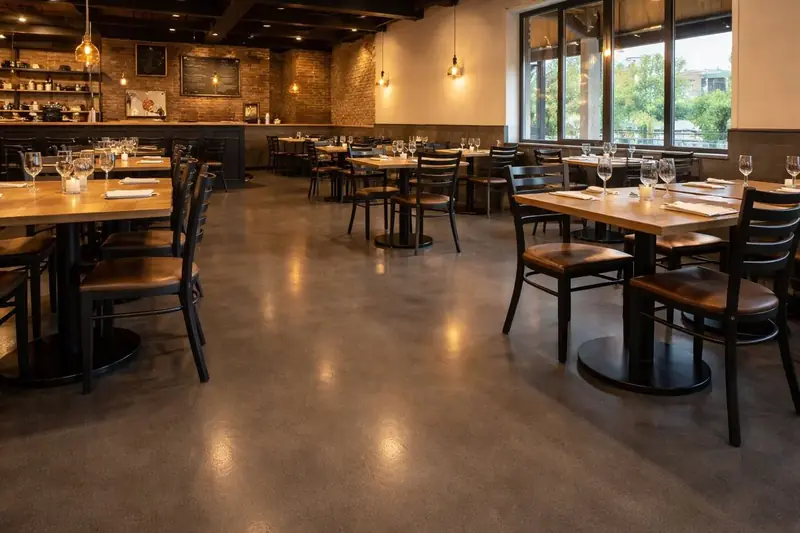
Commercial epoxy flooring gives Baton Rouge businesses a durable, seamless, sanitary, slip-resistant floor that stands up to heavy traffic, chemicals, and washdowns — but in our humidity it only lasts if the slab is moisture-mitigated first.
Your floor is one of the hardest-working surfaces in your building. It takes forklift traffic, dropped tools, spilled chemicals, grease, foot traffic, rolling carts, and daily cleaning, often all in the same week. A bare or painted concrete slab simply was not designed for that kind of punishment, which is why so many Baton Rouge business owners eventually start looking for something tougher. Commercial epoxy flooring is the answer most of them land on, because a properly installed resinous floor solves durability, cleanliness, safety, and appearance in a single system.
This guide is written for the person signing the check. We will walk through why epoxy makes sense for commercial buildings, how the right system changes from one industry to the next, what the major coating options cost, and how a smart installation plan keeps your doors open while the work gets done. Throughout, we focus on the realities of operating in Baton Rouge, Prairieville, Gonzales, Denham Springs, and the surrounding parishes. If you would rather talk it through, call (337) 243-3062 for a free on-site assessment.
Why Baton Rouge Businesses Choose Epoxy
Commercial epoxy is not a single benefit but a stack of them, and the combination is what makes it the default choice for warehouses, kitchens, shops, and showrooms. Here is what business owners are really buying when they coat a slab.
Durability under real load. A commercial-grade epoxy or resinous floor bonds directly to properly profiled concrete and cures into a hard, abrasion-resistant surface that shrugs off forklift wheels, pallet jacks, dropped tools, and constant foot traffic. Instead of a slab that chips, dusts, and cracks at the surface, you get a floor that protects the concrete underneath and keeps performing for a decade or more.
Seamless means sanitary. Epoxy goes down as a continuous, monolithic surface with no grout lines, seams, or tile joints for dirt, grease, and bacteria to collect in. Optional integral cove base curves the floor up the wall so there is no hard 90-degree corner to trap grime. For any business that gets inspected or that simply needs to look clean, a seamless floor is dramatically easier to keep that way.
Chemical resistance. The right resin system resists oils, solvents, cleaning chemicals, battery acid, food acids, and more. That matters in an auto shop where brake fluid hits the floor daily, in a kitchen where degreasers run constantly, and in a warehouse where a leaking drum should not eat into your slab. A coated floor wipes clean where a bare slab would stain and degrade.
Slip resistance you can specify. Smooth epoxy can be glossy, but for any area that gets wet, anti-slip aggregate is broadcast into the coating to add traction. You choose the level of texture, so a kitchen or washdown area gets an aggressive non-slip finish while a showroom keeps a sleeker look. Safety becomes a design decision rather than an afterthought.
Easy cleaning and lower upkeep. A seamless, non-porous floor mops and pressure-washes clean in a fraction of the time a porous or jointed floor takes, and it does not need waxing or stripping the way some commercial finishes do. Less cleaning labor and fewer chemicals add up over the life of the floor.
A professional look. Whether you want a clean uniform color, a decorative flake blend that hides wear, or a high-gloss metallic in a showroom, epoxy looks finished and intentional. A sharp floor signals to customers, inspectors, and employees that the operation is run well.
Cost-effective over its lifecycle. The upfront price is higher than paint or bare concrete, but a professionally installed epoxy floor routinely lasts 10 to 20 years with minimal maintenance. Spread across that lifespan, and factoring in the slab protection and reduced cleaning, it is one of the better-value surfaces a commercial building can have.
Epoxy by Industry
There is no single “commercial epoxy floor.” The right system depends on what happens in your building every day. Below is how the priorities shift across the most common commercial uses we serve in the Baton Rouge area.
Warehouses & Distribution
Warehouse floors live and die by abrasion resistance. Forklifts, pallet jacks, and steel-wheeled carts run the same lanes hundreds of times a day, and a coating that is too thin or too soft will wear through in the traffic aisles first. A high-build epoxy holds up to that load, while a clear, durable topcoat keeps the surface easy to sweep and wash. Safety line striping and color-coded zones can be laid right into the system to mark forklift lanes, pedestrian walkways, and staging areas, which improves both safety and throughput on a busy floor.
Restaurants & Commercial Kitchens
A commercial kitchen is one of the most demanding floors there is: constant water, grease, hot spills, dropped pans, and aggressive daily cleaning. A food-safe quartz-broadcast system is built for it, giving you a seamless, non-porous surface with no grout lines for bacteria to hide in and enough texture to stay slip-resistant when the floor is wet. Run an integral cove base up the walls and the whole floor can be hosed and squeegeed to USDA and HACCP standards. For Baton Rouge restaurants, that combination of sanitation and traction is exactly what passes inspection and keeps staff on their feet safely.
Retail & Showrooms
In retail, the floor is part of the brand. Here the goal is a finish that looks impressive and holds up to steady foot traffic and rolling displays without scuffing or dulling. Decorative flake blends and flowing metallic epoxy both deliver a high-end look, with metallic in particular turning a plain slab into a showpiece for auto showrooms, boutiques, and lobbies. Because the floor is seamless and sealed, it keeps that showroom shine with simple cleaning rather than constant refinishing.
Auto & Mechanical Shops
Auto shops punish floors with oil, brake fluid, coolant, solvents, and the heat off freshly driven tires. A quality epoxy system resists those chemicals so spills wipe up instead of soaking in and staining, and a proper coating shrugs off hot-tire pickup, the lifting and discoloration that ruins cheap garage paint when a hot tire parks on it. The result is a shop floor that looks clean, cleans up fast, and protects the slab from the chemicals that would otherwise degrade it.
Medical & Healthcare
Clinics, labs, and other healthcare spaces need a floor that is genuinely sanitary, not just clean-looking. A seamless epoxy system with an integral cove base eliminates the seams and corners where contaminants collect, and antimicrobial additives can be specified to further inhibit bacterial growth on the surface. The result is a floor that can be disinfected thoroughly and consistently, supports infection-control protocols, and still looks bright and professional in a patient-facing environment.
Commercial Coating Systems
Once you know what your building demands, the next decision is the coating system itself. The table below compares the four systems we most often specify for commercial work in Baton Rouge.
| System | Best Industry / Use | Key Strength |
|---|---|---|
| Solid Color Epoxy | Storage, back-of-house, light commercial | Clean, sealed, budget-friendly |
| Flake Broadcast | Retail, showrooms, light industrial | Hides wear, slip-resistant, decorative |
| Quartz Broadcast | Kitchens, healthcare, food service | Sanitary, anti-slip, USDA/HACCP-ready |
| Metallic Epoxy | Showrooms, lobbies, hospitality | High-end, one-of-a-kind appearance |
Pick your size, finish, and color. Get your Baton Rouge price range in 60 seconds.
Open Floor Studio →Solid color epoxy is the budget workhorse. It seals the slab in a single uniform color, cleans easily, and resists chemicals and abrasion well enough for storage rooms, back-of-house areas, and light-duty commercial spaces. It shows tire marks and dust more readily than textured systems, so it is best where appearance is secondary to function.
Flake broadcast systems add vinyl color chips into the wet coating, creating a textured, multicolor finish that hides minor imperfections and wear while adding slip resistance. It is a strong all-rounder for retail, showrooms, and light industrial floors that need to look good and take traffic.
Quartz broadcast uses colored quartz aggregate locked under a clear sealer to build a thicker, more aggressive anti-slip surface. It is the go-to for commercial kitchens, healthcare, and any food-service environment that has to meet sanitation standards while staying safe underfoot when wet.
Metallic epoxy is the premium decorative option, producing a flowing, three-dimensional finish where no two floors look alike. It is ideal for showrooms, lobbies, and hospitality spaces where the floor is part of the customer experience.
The Baton Rouge Factor
Everything above applies to commercial floors anywhere. What makes Baton Rouge different is what is happening underneath the slab, and on a large commercial floor that issue is multiplied across thousands of square feet.
Moisture mitigation on humid slabs. Louisiana's average relative humidity sits around 74 percent, and the high water table across much of East Baton Rouge Parish drives moisture vapor up through slab-on-grade concrete. When that vapor pushes against a coating with nowhere to go, it causes bubbling, blistering, and delamination, sometimes within months. A professional installer tests the slab first with a calcium chloride or relative-humidity probe test, and where moisture is elevated, installs a moisture vapor barrier before any coating goes down. On a small garage this is a minor add; on a 10,000-square-foot warehouse it is a critical, building-wide decision that protects the entire investment. You can read more in our guide to Louisiana humidity and epoxy flooring.
Flood resilience. Water events are a fact of life in South Louisiana, and a seamless resinous floor is a real advantage when one happens. Because epoxy is non-porous and has no seams or grout lines, standing water sits on top rather than soaking in, and the floor cleans up far faster than tile, VCT, or bare concrete after the water recedes. Just as important, a properly installed vapor barrier prevents the moisture that lingers in a slab after a flood from delaminating the coating later. For a commercial building that has to reopen quickly after a weather event, a floor that wipes down and goes back to work is a genuine business asset.
Why it matters more at commercial scale. The bigger the floor, the bigger the consequences of skipping moisture testing. A failed coating on a large warehouse or production floor means lost production time, a re-prep, and a re-coat across the whole area, which is far more disruptive and expensive than getting it right once. The Great Flood of 2016 left tens of thousands of structures in the Baton Rouge metro with slabs that absorbed significant moisture, and those slabs in particular deserve thorough testing before any commercial coating goes down. In our market, moisture mitigation is not an upsell; it is the difference between a floor that lasts and one that fails.
Cost & Drivers
Every commercial floor in Baton Rouge is priced after a free on-site measurement. There is no flat rate, because a commercial quote is built from your specific building. Here are the factors that move the number.
- Square footage. Larger floors usually carry a lower per-square-foot rate, because fixed costs for mobilization, equipment, and setup are spread across more area. A small back room can cost more per foot than an open warehouse many times its size.
- Coating system. The system you choose is a primary driver, from solid color at the low end to metallic at the top. Matching the system to the actual demands of the space keeps you from overpaying or underspecifying.
- Moisture mitigation. Where slab moisture testing comes back high, a vapor barrier is required before coating, which adds to the cost but protects the entire floor. On large commercial slabs this can be a meaningful line item, and it is not one to skip in Baton Rouge.
- Surface prep and old-coating removal. Every floor is diamond-ground or shot-blasted to create the profile epoxy needs to bond. Stripping a failed previous coating, repairing cracks and spalls, and filling control joints all add prep labor.
- Anti-slip and food-safe requirements. Broadcasting anti-slip aggregate or specifying a USDA/HACCP-compliant food-safe system adds material and labor compared with a smooth basic finish.
- Integral cove base. Turning the floor up the wall for seamless, hose-down sanitation is common in kitchens and healthcare and is priced per linear foot of wall.
- Line striping and zoning. Forklift lanes, pedestrian walkways, and color-coded zones laid into the system add value for safety and flow, and add to the quote.
- Phased scheduling. Coating an occupied space in sections, after hours, or overnight to keep you running adds labor and coordination compared with a single uninterrupted install.
Planning a Commercial Floor in Baton Rouge?
Every building is different. Call for a free on-site assessment, slab moisture test, and a written estimate tailored to your operation.
Minimizing Downtime
For a business owner, the real cost of a new floor is not just the quote; it is the days you cannot operate while it cures. The good news is that a well-planned commercial install can keep most of your operation running, and in many cases avoid closing at all.
Phased installation. Rather than shutting down the whole building, we coat the floor in sections so part of your space stays open while another area is being prepped and coated. As each section cures and returns to service, work moves to the next. For warehouses, kitchens, and shops with distinct zones, phasing is often the difference between staying open and going dark.
Fast-cure polyaspartic topcoats. Where speed is critical, a polyaspartic system cures dramatically faster than standard epoxy, allowing return to service in as little as one day instead of several. That faster turnaround can shrink the disruptive window to a single overnight or weekend, which is exactly what most commercial operations need.
After-hours and weekend scheduling. Many Baton Rouge businesses simply have the work done when they are already closed. Coating overnight or across a weekend lets the floor cure during downtime so you reopen on a finished surface with no lost business hours.
Sectioning to keep the business running. Even within a single open area, a smart crew can rope off and coat half the floor while the other half stays in use, then switch. Combined with a clear plan agreed before work starts, this keeps customers served and product moving while the upgrade happens around them.
The key is planning. Before any work begins, we map the sequence with you so you know exactly which areas are open, which are closed, and when each comes back online. A commercial floor is a major upgrade, but it does not have to mean a major shutdown.
Frequently Asked Questions
How much does commercial epoxy flooring cost in Baton Rouge?
Every commercial floor in Baton Rouge is priced after a free on-site measurement. Your final price depends on square footage, the coating system, slab condition and prep, whether moisture mitigation is required, and add-ons like cove base, anti-slip aggregate, or line striping. Larger floors usually see a lower per-square-foot rate because fixed setup costs are spread across more area. Call (337) 243-3062 for a free estimate and an exact price, with no obligation.
Is epoxy good for a commercial kitchen?
Yes. A seamless quartz-broadcast system is one of the best floors for a commercial kitchen because it has no grout lines for grease and bacteria to hide in, stays slip-resistant when wet, and stands up to hot water, oils, and frequent washdowns. With an integral cove base running up the walls, the floor can be cleaned to USDA and HACCP standards. It is a common choice for Baton Rouge restaurants and food-service operations.
How long does a commercial epoxy floor last?
A professionally installed commercial epoxy floor typically lasts 10 to 20 years or more, depending on the system and traffic. Heavy-duty quartz floors in industrial use last the longest, while lighter-traffic retail and office floors fall in the middle of that range. In Baton Rouge the single biggest factor in longevity is proper moisture mitigation up front, because vapor coming through an unprotected slab is the leading cause of premature failure here.
Can you install without closing my business?
In most cases, yes. Commercial floors can be installed in phases or in sections so part of your space stays open while another area is coated, and fast-cure polyaspartic topcoats allow return to service in as little as one day. Many Baton Rouge businesses schedule the work after hours, overnight, or over a weekend to avoid disrupting operations. We plan the sequence with you before work begins so you know exactly what is open and when.
Do commercial slabs need moisture mitigation in Baton Rouge?
Often, yes. Louisiana's average relative humidity sits near 74 percent and the high water table across East Baton Rouge Parish pushes moisture up through slab-on-grade concrete. Because commercial floors cover large areas, a moisture test should be done first; if levels are elevated, a vapor barrier is installed before the coating goes down. Skipping this step is the leading cause of bubbling and delamination on commercial floors in our climate.
Is epoxy slip-resistant enough for a wet area?
Yes, when the right system is specified. Anti-slip aggregate such as quartz, aluminum oxide, or polymer grit is broadcast into the coating to create texture that stays grippy when wet. This is standard for commercial kitchens, washdown areas, entryways, and ramps. The level of texture can be tuned to balance traction with ease of cleaning, so a wet-rated floor still mops clean.
Get a Commercial Epoxy Quote in Baton Rouge
The right commercial floor depends on what happens in your building, the condition of your slab, and how much moisture is moving through it. The only way to get an accurate number is to have a professional walk your space, test the concrete, and recommend a system that fits how you actually operate. At Ascent Epoxy Baton Rouge, every commercial quote starts with an in-person assessment, on-site moisture testing, and a written estimate with no surprises before any deposit.
Ready to upgrade your floor? Call us at (337) 243-3062 or request a free quote online. We serve businesses in Baton Rouge, Prairieville, Denham Springs, Gonzales, Central, Baker, Zachary, Walker, Port Allen, and the surrounding communities.
Related Articles
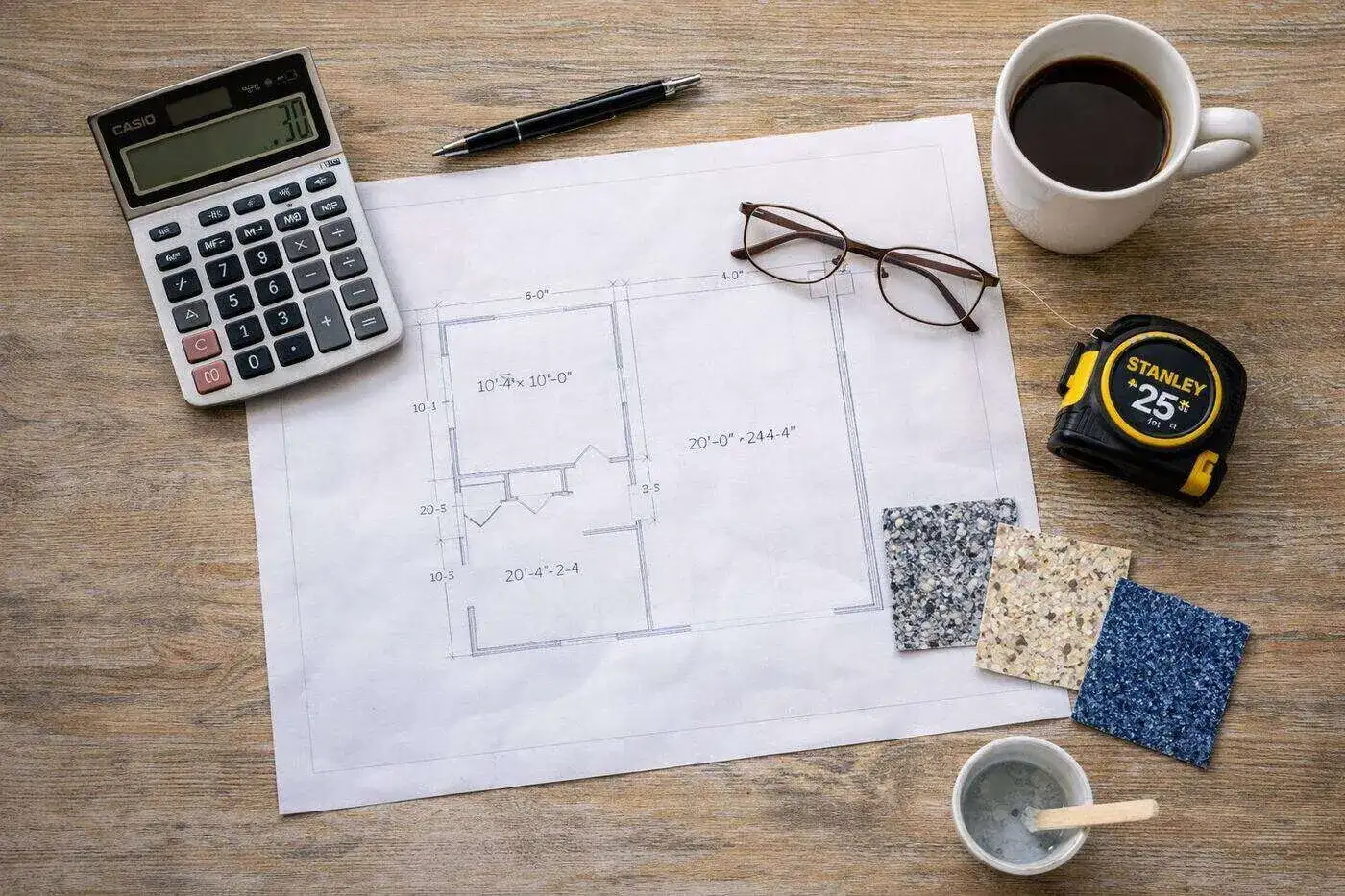
Epoxy Flooring Cost in Baton Rouge: What Sets Your Price (2026)
The factors that drive the price of a Baton Rouge floor up or down, project by project.
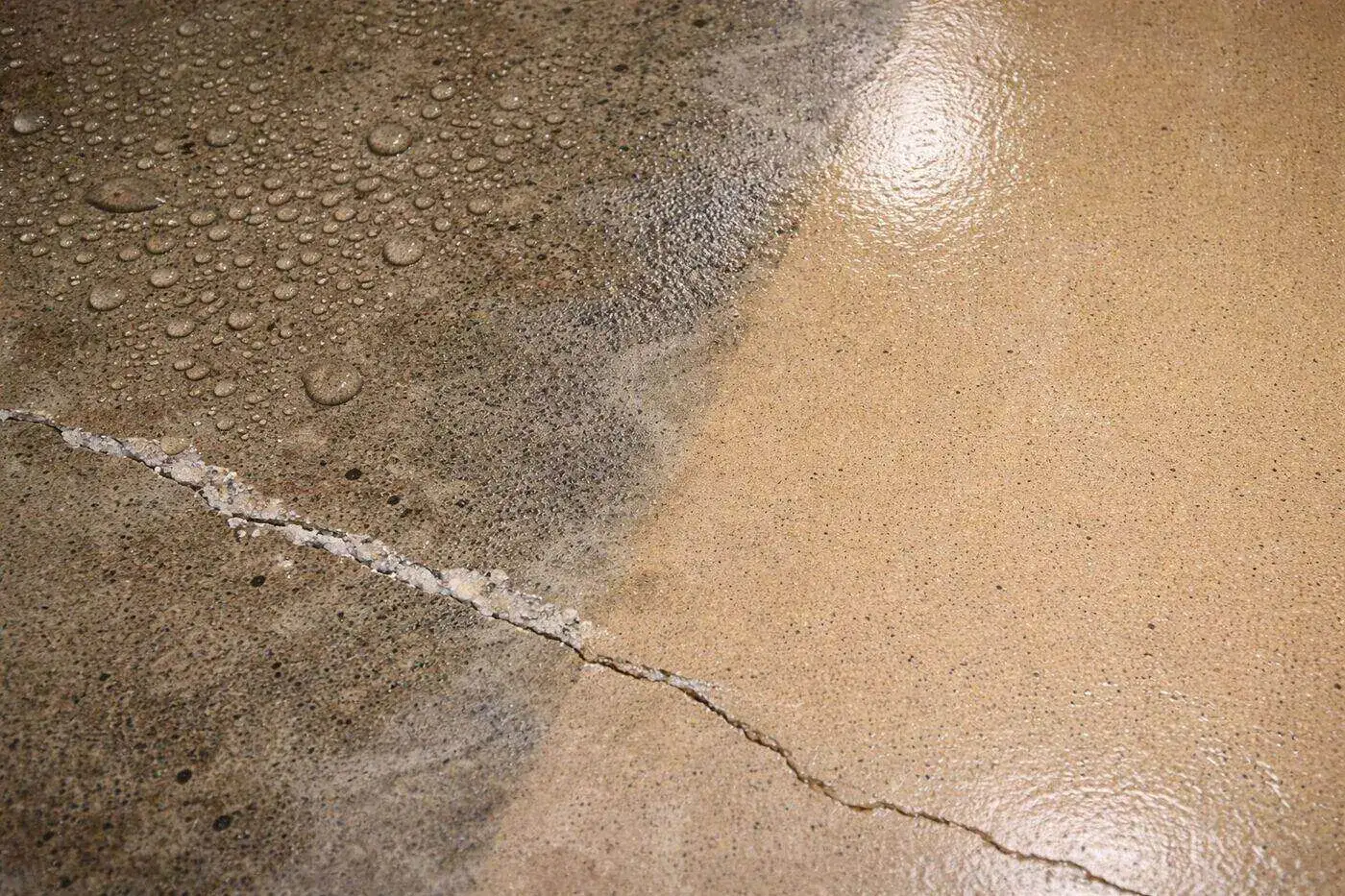
Louisiana Humidity and Epoxy Flooring: What You Need to Know
How Baton Rouge's climate affects epoxy installation, curing, and long-term performance.
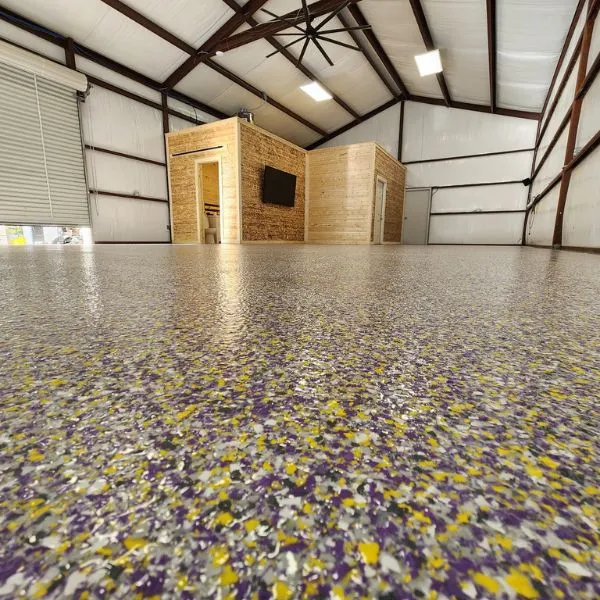
How Long Does an Epoxy Floor Last in Baton Rouge?
What determines lifespan in our humid climate and how to get the most years from your floor.