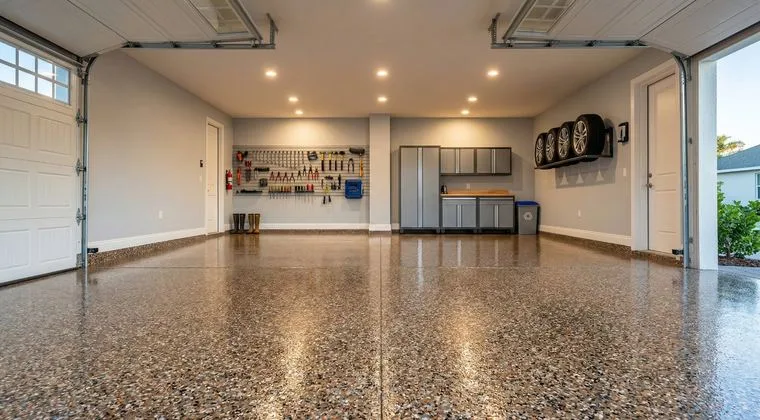
An epoxy floor is one of the lowest-maintenance surfaces you can own — regular dust-mopping plus an occasional damp mop with a pH-neutral cleaner keeps it looking new; the key in Baton Rouge is managing humidity, condensation, grit, and flood cleanup.
One of the biggest reasons homeowners and business owners in Baton Rouge choose epoxy in the first place is how little upkeep it demands. Unlike bare concrete, which absorbs oil and dust deep into its pores, a properly installed epoxy coating creates a seamless, non-porous surface. Spills sit on top instead of soaking in, dirt sweeps away cleanly, and there are no grout lines or seams for grime to hide in. Maintaining that floor is genuinely simple, but a few habits make the difference between a coating that looks brand new for a decade and one that dulls prematurely.
This guide walks through the complete care routine for an epoxy floor in our climate: the day-to-day cleaning that takes minutes, the products that quietly destroy a topcoat if you use them, the specific challenges that South Louisiana humidity and flooding create, and how to handle the stains that show up in every garage and commercial kitchen. Whether you just had a new floor installed or you are reviving one that has been neglected, the steps below will keep it performing for years. If you would rather have a professional refresh or recoat your floor, you can always call us at (337) 243-3062.
The Simple Epoxy Floor Maintenance Routine
Caring for an epoxy floor comes down to two basic actions: keeping grit off the surface and wiping it down when it gets dirty. That is it. There is no waxing, no buffing, no sealing, and no special equipment required. The most important thing to understand is that fine grit and sand are the real enemy of an epoxy floor. When you walk or drive across the surface, those tiny particles act like sandpaper underfoot and dull the gloss over time. Removing them regularly is far more important than aggressive scrubbing.
For everyday dust and debris, a dust mop, a soft-bristle push broom, or a microfiber pad works perfectly. When the floor needs a deeper clean, a flat microfiber mop with warm water does most of the work, and for anything stickier you simply add a small amount of pH-neutral floor cleaner. A pH-neutral cleaner is one that is neither acidic nor strongly alkaline, so it lifts dirt without attacking the coating. Below is a realistic schedule that keeps a Baton Rouge floor looking its best.
| Frequency | Task |
|---|---|
| Daily | Wipe up spills, oil drips, and tracked-in water promptly; knock loose obvious debris near doors and high-traffic lanes. |
| Weekly | Dust-mop or soft-broom the entire floor to clear grit and sand; spot-clean any sticky marks with warm water. |
| Monthly | Damp-mop the whole floor with warm water and a pH-neutral cleaner; rinse with clean water and let it air-dry. |
| Annual | Inspect for dull spots, scratches, or worn lanes; deep-clean, and plan a clear recoat if the gloss is fading. |
A few practical notes make this routine even easier. Always sweep or dust-mop before you wet-mop, because mopping over loose grit just drags it across the surface and creates fine scratches. Use warm rather than hot water, work in manageable sections, and change your mop water once it turns gray so you are not spreading dirt around. There is no need to apply wax or floor polish — a quality epoxy or polyaspartic topcoat already provides the gloss and protection, and consumer waxes can actually leave a hazy film that is difficult to remove later. For a routine touch-up on a garage floor, a quick rinse with a garden hose and a soft push broom is often all it takes, as long as the floor has good drainage and you let it dry.
What NOT to Use on an Epoxy Floor
This is the most important section of the entire guide, because the fastest way to ruin a perfectly good epoxy floor is using the wrong cleaning products. Most coating damage we see in Baton Rouge does not come from heavy use — it comes from well-intentioned cleaning with the wrong chemicals. The protective topcoat is durable, but it is not indestructible, and a handful of common household products will dull, etch, or soften it over time. Avoid the following.
Vinegar and Citrus or Acidic Cleaners
Vinegar is the single most common mistake. It is acidic, and acid slowly etches and dulls the clear topcoat that gives epoxy its shine and stain resistance. The same goes for lemon-based cleaners, citrus degreasers, and any product that lists citric or acetic acid. A floor cleaned with vinegar week after week gradually loses its gloss and develops a chalky, lifeless look that no amount of buffing brings back. Always reach for a pH-neutral cleaner instead — it cleans every bit as well without chemically attacking the coating.
Abrasive Pads, Steel Wool, and Scouring Powder
Anything that physically scratches the surface will leave permanent marks. Steel wool, green and brown scouring pads, scouring powders, and stiff wire brushes all grind into the topcoat and create a dull, hazy patch wherever you scrub. When a stain needs agitation, use a soft-bristle brush or a white non-abrasive pad and let the cleaner do the chemical work rather than relying on muscle. Mechanical abrasion is one of the few things that can damage epoxy in a way that only a professional recoat can fix.
Harsh Degreasers and Soap-Film Cleaners
Strong industrial degreasers and solvent-based cleaners can soften or cloud an epoxy topcoat, especially if they are left to sit. Just as problematic are oil-based or soap-heavy floor cleaners, which leave behind a slick residue that makes the floor slippery and attracts dirt. That film also dulls the finish and can become a real slip hazard on a glossy surface. Stick with a cleaner specifically labeled as safe for epoxy or polyurethane floor coatings, and rinse thoroughly so no residue is left behind.
Undiluted Bleach, Ammonia, and Comet-Style Powders
Undiluted bleach and ammonia are harsh enough to discolor and degrade the coating with repeated use, and powdered abrasive cleansers like Comet combine a scouring grit with aggressive chemicals — the worst of both worlds for an epoxy surface. If you need to disinfect, a heavily diluted solution applied briefly and rinsed off is far safer than pouring product directly onto the floor. As a rule, if a cleaner is strong enough to make you open a window, it is probably too strong to be sitting on your epoxy coating.
Baton Rouge Climate Care: Humidity, Condensation & Floods
Maintaining an epoxy floor in Baton Rouge involves a few considerations that homeowners in drier states never think about. Our high humidity, frequent heavy rain, and history of flooding all interact with a garage or shop floor in ways worth understanding. The good news is that a properly installed, non-porous epoxy coating is one of the best surfaces you can have for this climate — but a little awareness keeps it safe and slip-free year-round.
Humidity and Slab Condensation
On humid days, especially in spring and summer, you may notice your garage floor looking damp or even wet without a single drop being spilled. This is condensation: warm, moisture-laden air meets the cooler surface of the concrete slab and water beads on top, much like a cold glass sweats on a hot afternoon. It is not a coating failure, but it can make a glossy floor slippery. Wipe up standing water when you see it, keep the space ventilated, and in a closed garage run a dehumidifier during the most humid stretches to pull moisture out of the air. Keeping the garage door closed during the hottest, most humid parts of the day also reduces how much warm outside air reaches the cool slab.
Flood and Storm Cleanup
Communities across the Baton Rouge area — from Denham Springs and Walker to Prairieville and Central — know how quickly water can rise. If your epoxy floor takes on floodwater, the cleanup is straightforward but time-sensitive. Rinse silt and mud off the surface promptly with clean water before it dries, because once that fine sediment hardens it is much harder to remove and can scratch the floor as you scrub it. Follow up by washing the floor with warm water and a pH-neutral cleaner. Because a properly installed epoxy coating is non-porous, floodwater sits on top rather than soaking into the slab, which is a major advantage over bare or painted concrete. After cleaning, check the edges, seams, control joints, and any cracks for trapped moisture or signs of dampness working under the coating, and have it professionally inspected if water stood for an extended period.
Mud, Grit, and Sandpaper Underfoot
Between our rainy season and the sandy, silty soil common across the region, Baton Rouge floors see a lot of tracked-in mud and grit. As mentioned earlier, this grit is the leading cause of premature gloss loss, because every footstep and tire pass grinds it into the coating like fine sandpaper. The fix is simple and cheap: place walk-off mats at every entry point and a larger mat where vehicles enter the garage, and sweep or dust-mop frequently so grit never has the chance to accumulate. A few well-placed mats and a weekly sweep do more to preserve your floor's finish than any premium cleaner ever will.
How to Remove Common Stains
Because epoxy is non-porous, the vast majority of stains never actually penetrate the surface — they sit on top and wipe away with routine cleaning. For the stubborn ones, the key is to use the gentlest method that works and to avoid the abrasive tools and harsh chemicals covered above. The table below summarizes the safe approach for the stains we see most often on Baton Rouge garage and commercial floors.
| Stain Type | Safe Removal Method |
|---|---|
| Oil & grease | Blot up the liquid, sprinkle an absorbent like baking soda or cat litter on residue, then wash with warm water and a mild, epoxy-safe degreaser. |
| Hot-tire marks | Apply a pH-neutral or epoxy-safe cleaner, let it dwell several minutes, agitate with a soft-bristle brush or white pad, then rinse. |
| Rust | Use a non-acidic, epoxy-safe rust remover; let it dwell, work gently with a soft brush, and rinse — never use acidic rust products. |
| Paint & adhesive | Gently scrape with a plastic (not metal) razor or putty knife, then clean the spot with warm soapy water. |
| Food & organic (commercial kitchens) | Wipe promptly, then damp-mop with warm water and a pH-neutral or epoxy-safe sanitizing cleaner; rinse to remove residue. |
A few principles tie all of these together. Always address spills quickly — even though epoxy resists staining, the sooner you wipe up oil, chemicals, or food, the easier the job and the lower the chance of a slip. Let the cleaner do the chemical work with a short dwell time before you agitate, so you can use a soft brush instead of a harsh pad. For paint, adhesive, or anything dried-on, a plastic scraper is your friend; a metal blade will gouge the coating. And when in doubt, test any new product on a small, out-of-the-way corner first to make sure it does not dull or discolor the finish.
Floor Looking Tired? We Can Recoat It.
A clear recoat refreshes the gloss and adds years of life — far cheaper than a full re-install. Call for a free assessment.
Protecting the Surface and When to Recoat
Beyond cleaning, a handful of small protective habits add years to an epoxy floor's life by preventing the scratches and gouges that no cleaner can undo. The coating is tough, but it is not scratch-proof, and a little prevention goes a long way toward keeping that showroom gloss.
Everyday Protective Habits
Stick felt pads under furniture legs, tool chests, and anything else that gets moved across the floor, and add caster cups or soft wheels to rolling carts and shelving. Place a mat under vehicle tires and another beneath any floor jack or jack stands, since concentrated point loads and twisting tires are hard on a coating. Avoid dragging metal objects — toolboxes, equipment, ladders, and metal shelving — directly across the surface; lift and carry them instead, or set them on a moving blanket. When parking a hot vehicle, the mat under the tires also helps reduce hot-tire pickup, where heat from the tread temporarily softens the topcoat. None of these steps are demanding, but together they prevent the majority of avoidable wear.
When and Why to Recoat
Even a well-maintained epoxy floor will gradually lose some gloss in its highest-traffic lanes, and that is exactly when a clear recoat pays off. A recoat is a fresh layer of clear topcoat applied over your existing, properly prepped floor — it restores the shine, renews the protective layer, and extends the overall life of the system. Most residential floors benefit from a recoat every five to ten years, while busy garages and commercial floors may need one sooner. You do not have to wait for the floor to fail; in fact, recoating before the wear reaches the colored base coat is what keeps the underlying system intact and avoids a far more expensive full re-installation. If you notice dulling, light scratching, or thin spots forming in the lanes you use most, that is the signal to schedule a recoat.
When to Call a Professional
Most epoxy maintenance is genuinely a do-it-yourself task — the routine cleaning and protective habits above are well within any homeowner's reach. But there are situations where bringing in a professional is the smarter, more cost-effective move, because the underlying coating needs more than a wash. Reach out to a pro in any of the following cases.
- Deep restoration of a neglected floor: if a floor has years of ground-in grime, embedded stains, or a heavily dulled surface, a professional deep-clean and recoat can bring it back far better than scrubbing ever will.
- A clear recoat to refresh the gloss: when the shine is fading in high-traffic lanes, a properly prepped and applied recoat restores it and extends the floor's life — and it requires the right surface prep to bond correctly.
- Peeling, bubbling, or delamination: if the coating is lifting, flaking, or separating from the slab, that points to a moisture or adhesion issue underneath that has to be diagnosed and corrected, not just cleaned over.
- Post-flood remediation: if floodwater stood on the floor for an extended period, a professional can check for moisture trapped under the coating, treat the slab if needed, and confirm the system is still sound.
- Chips, gouges, or cracks reaching the concrete: physical damage that exposes the slab should be repaired promptly so moisture and contaminants do not work their way underneath the surrounding coating.
The simple rule of thumb: if the problem is on the surface, you can almost always handle it yourself with the methods in this guide. If the problem is the coating itself — adhesion, moisture, peeling, or worn-through areas — that is when a professional assessment protects your investment. We serve Baton Rouge, Prairieville, Denham Springs, Gonzales, Central, Baker, Zachary, Walker, Port Allen, and the surrounding communities.
Frequently Asked Questions
How do I clean an epoxy floor?
Dust-mop or soft-broom the floor a few times a week to remove the grit that scratches the topcoat, then damp-mop as needed with warm water and a pH-neutral cleaner. Wipe up spills promptly, skip wax and harsh chemicals entirely, and your floor will keep its gloss for years. Never use vinegar, citrus cleaners, or abrasive pads, because they dull and etch the finish.
Can I use vinegar on epoxy?
No. Vinegar is acidic, and over time it etches and dulls the protective topcoat that gives an epoxy floor its gloss and stain resistance. The same applies to lemon, citrus, and other acidic cleaners. Stick to a pH-neutral floor cleaner diluted in warm water, which cleans just as effectively without harming the coating.
How do I remove tire marks or oil stains from an epoxy floor?
For hot-tire marks, apply a pH-neutral or dedicated degreaser-safe epoxy cleaner, let it dwell for several minutes, then agitate with a soft-bristle brush or a white non-abrasive pad and rinse. For fresh oil or grease, blot it up, sprinkle an absorbent like baking soda or cat litter on any residue, then wash with warm water and a mild degreaser. Avoid steel wool, scouring powder, and harsh solvents, which scratch or soften the coating.
Does Baton Rouge humidity affect floor maintenance?
Yes. Baton Rouge's high humidity causes condensation to form on a cool slab, so you may see a damp or sweaty floor during humid spells. Wipe up standing water, ventilate or run a dehumidifier in a closed garage, and keep mats at entry points to catch tracked-in moisture. Managing humidity prevents slips and keeps moisture from working into any seams or edges of the coating.
How do I clean an epoxy floor after a flood?
Rinse silt and mud off the surface promptly with clean water before it dries and hardens, then wash with warm water and a pH-neutral cleaner. The good news is that a properly installed epoxy floor is non-porous, so floodwater sits on top rather than soaking in. After cleaning, check the edges, seams, and any cracks for trapped moisture or signs of under-coating dampness, and have a professional inspect for delamination if water sat for an extended period.
How often should I recoat an epoxy floor?
Most residential epoxy floors benefit from a fresh clear topcoat every five to ten years to refresh the gloss and extend the life of the system, while high-traffic garages and commercial floors may need it sooner. You do not have to wait for failure. A periodic recoat is far cheaper than a full re-installation. If you notice dulling, light scratching, or thin spots in high-traffic lanes, that is the right time to schedule a recoat.
Keep Your Baton Rouge Floor Looking New
The beauty of an epoxy floor is how little it asks of you in return for years of seamless, easy-to-clean performance. Sweep away the grit, damp-mop with a pH-neutral cleaner, skip the vinegar and abrasive pads, manage our Louisiana humidity, and protect the surface from scratches — that is the entire formula. Stay on top of those simple habits and your floor will look as good in year eight as it did the day it was installed.
When your floor is ready for a refresh, a deep restoration, or a clear recoat to bring back the shine, we are here to help. Call us at (337) 243-3062 or request a free quote online. We serve Baton Rouge, Denham Springs, Prairieville, Gonzales, Central, and the surrounding communities throughout the area.
Related Articles
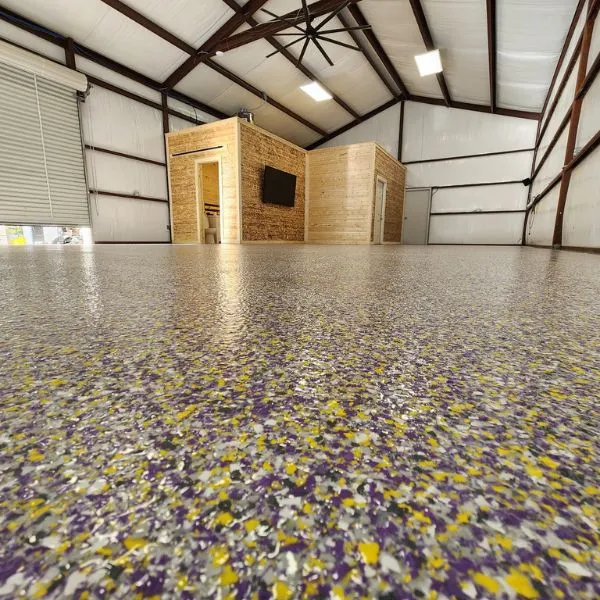
How Long Does an Epoxy Floor Last in Baton Rouge?
What determines epoxy floor lifespan in our climate, and how good maintenance extends it.
Epoxy Flooring Cost in Baton Rouge: What Sets Your Price (2026)
What drives the price of a Baton Rouge floor up or down, project by project.
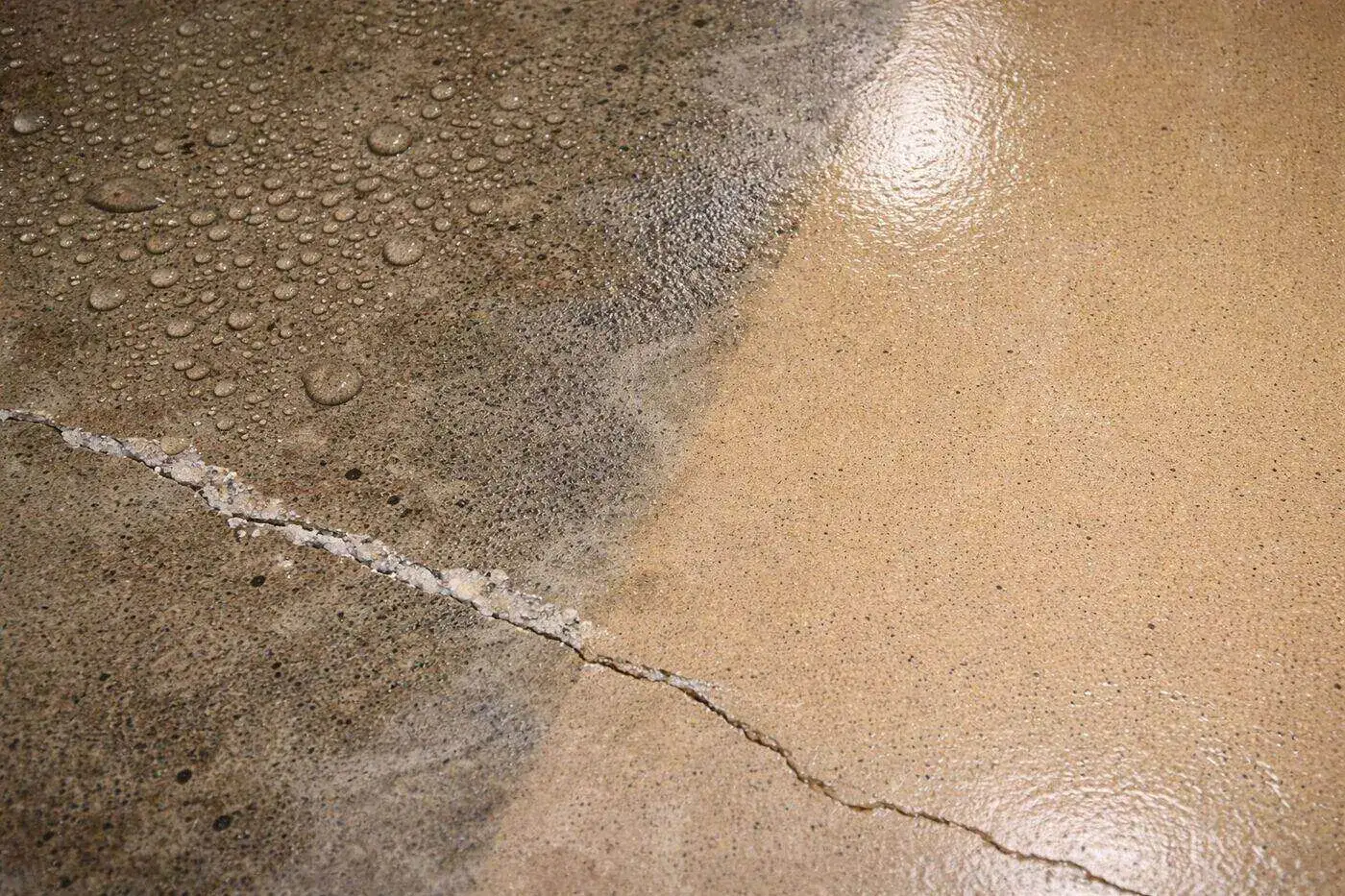
Louisiana Humidity and Epoxy Flooring: What You Need to Know
How Baton Rouge's climate affects epoxy installation, curing, and long-term performance.